SOME PEOPLE ARE new house people. They go forth in search of well-appointed TV rooms, rooftop decks and open floor plans. Then there are the old house people. The type who get all dreamy-eyed over vintage millwork and true divided light windows … stunning to look at, brutal for your energy bills.
Of course, old house people like big closets and custom kitchens, too. But updating a vintage home can be a bit of a diabolical riddle: Open up a bunch of walls to create a contemporary layout and suddenly the period charm is gone.
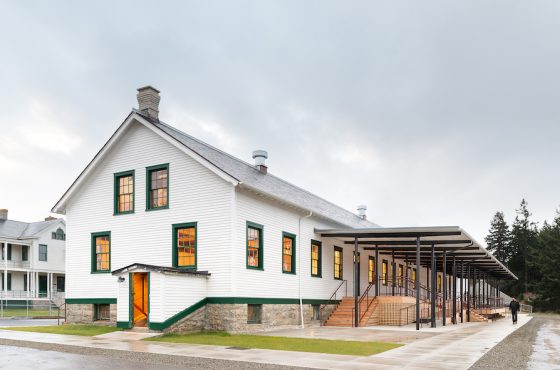
These two Seattle homes hail from different, yet memorable eras of architecture. Each one emerged from a thoughtful renovation much better suited to the way we live today, in a world full of kitchen hangouts and piles of shoes and coats that need a place to call home. But also with their distinct Craftsman or midcentury modern charms firmly intact. The homes’ respective owners and project teams accomplished all this without significant changes to the buildings’ exteriors (the exception: one game-changing mudroom). Both parties deserve some sort of award for creative achievements in the field of closet space.
Cozy comfort for multigenerations
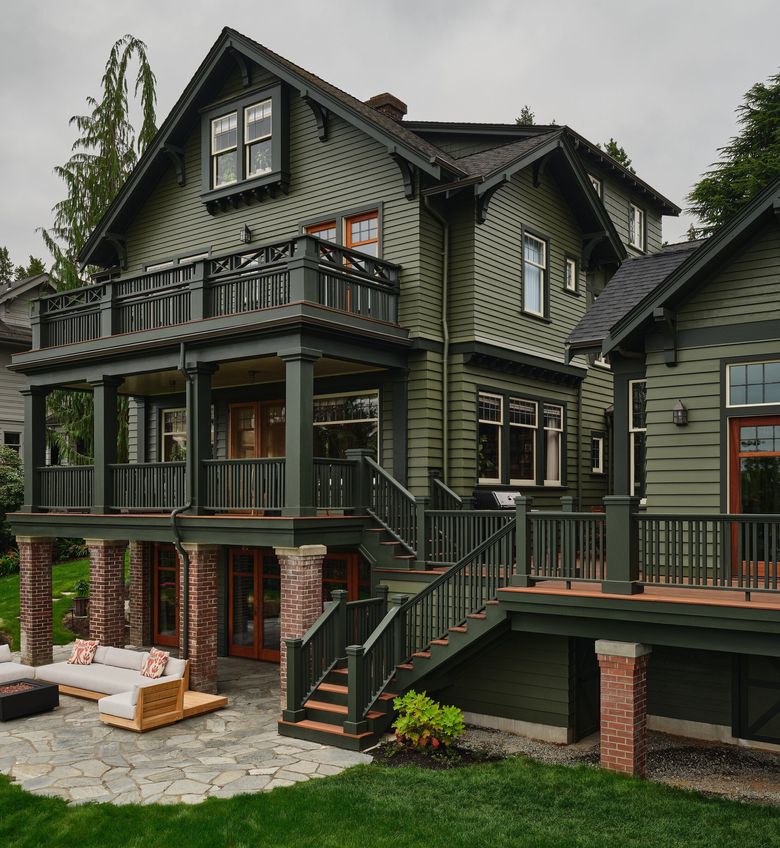
WHEN SRILAKSHMI REMALA and her husband, Viren Kamdar, first laid eyes on the 1919 Craftsman in Seattle’s Lakewood neighborhood, the kitchen was a narrow corridor of a place. Once upon a time, a back staircase presumably allowed cooks, housekeepers or other service workers to move unobtrusively between the galley-style room and family spaces like the sitting room and bedrooms.
Flash forward more than a century and Remala and Kamdar — like most people today — have the inverse relationship with their kitchen. It’s no longer a utilitarian room to wall off from the rest of the house, but rather a crossroads of daily life for the couple, their two sons and exactly zero servants.
This stately home perched over Lake Washington appealed to Remala, a senior program officer at the Gates Foundation, and Kamdar, who works in wealth management, because it was roomy enough to host gatherings with their extended families. There was even room for Kamdar’s parents to eventually join them. But the Craftsman architecture kept things from feeling too ostentatious compared with, say, an ornate Victorian.
Very little had been done over the years to muck up the original bones and classic layout. Still, when the couple bought the place in 2021, they knew they wanted to open up that kitchen.
They also sought a few other modern amenities: a primary suite, a powder room on the main floor and an informal family room where people could gather and watch TV. But not at the expense of their home’s historical appeal.
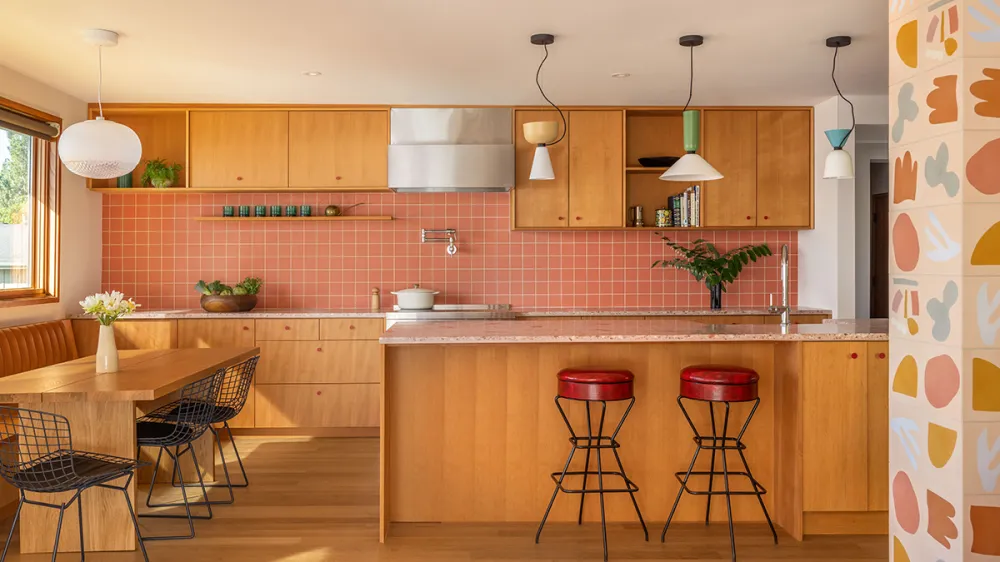
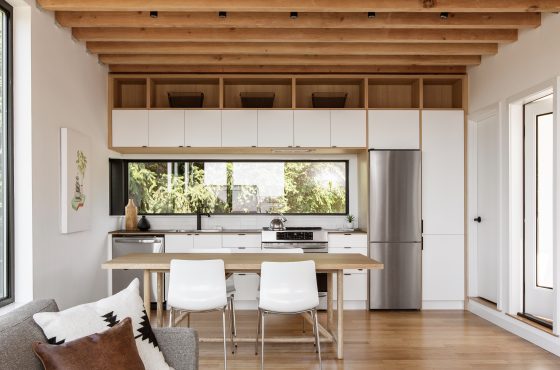
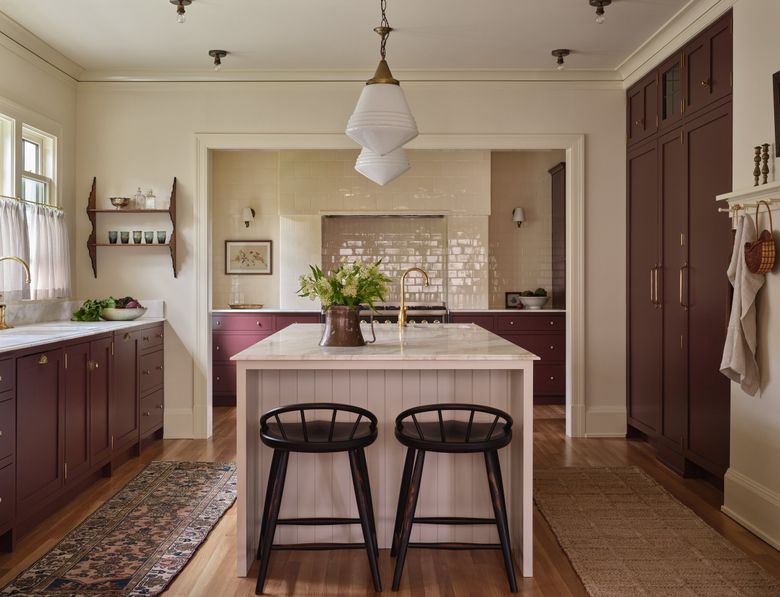
The team at Dyna Builders removed that back staircase to make the kitchen wide enough to accommodate an island. They opened a wall between the kitchen and dining room that previously was connected only by a swinging door — the better to keep that kitchen out of sight.
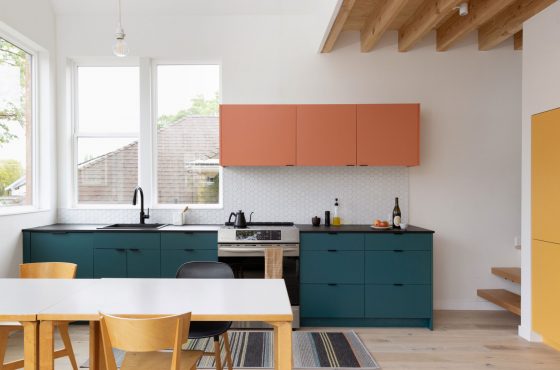
Now, says Remala, the kitchen is “the part of the house where everyone hangs out.” She and Kamdar take turns cooking dinner throughout the week. A former breakfast nook at one end of the room is home to the range, which anchors the wider layout almost like a hearth.
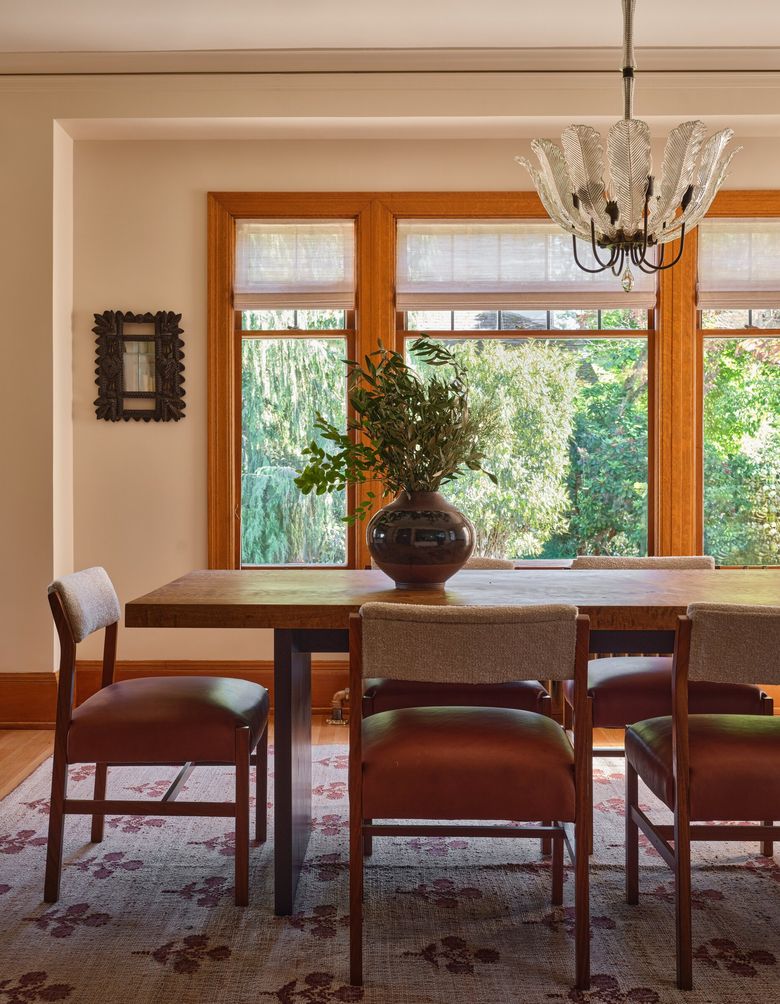
Even as it opened the space, the design and construction team preserved a segmented feeling to the rooms. This helps bridge modern layouts with more classic design, says Ren Chandler, Dyna’s founder and president. “You don’t want to go in there and have all the walls open. It doesn’t look right.”
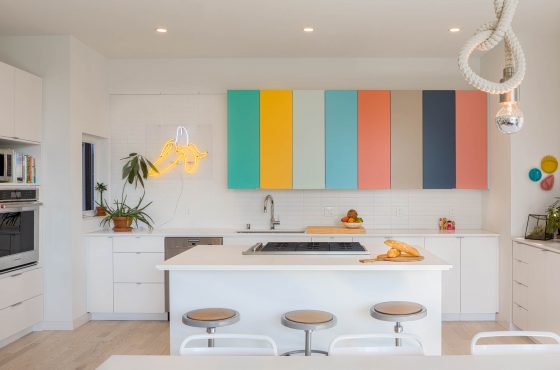
Remala wanted color, especially after their last home in Madrona, which had an abundance of white walls. But taking designer Lisa Staton’s suggestion to paint the cabinets plum was the renovation equivalent of a trust fall. This moody shade isn’t typical in a kitchen, but maybe it should be: In a home full of original wood, it harmonizes with the floors and trim without trying to match them outright.
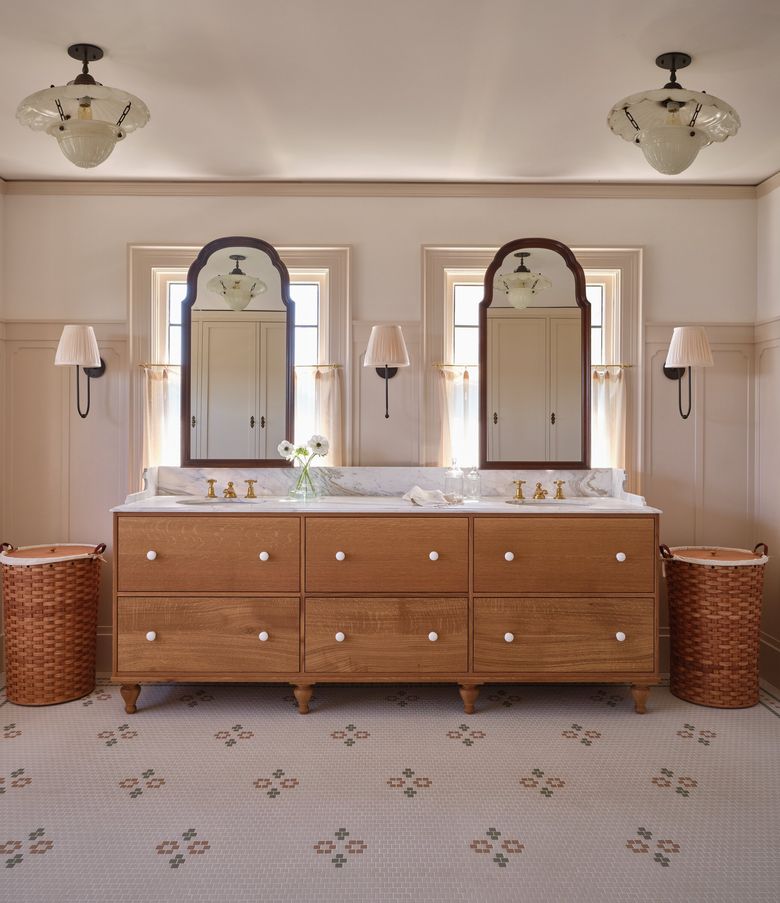
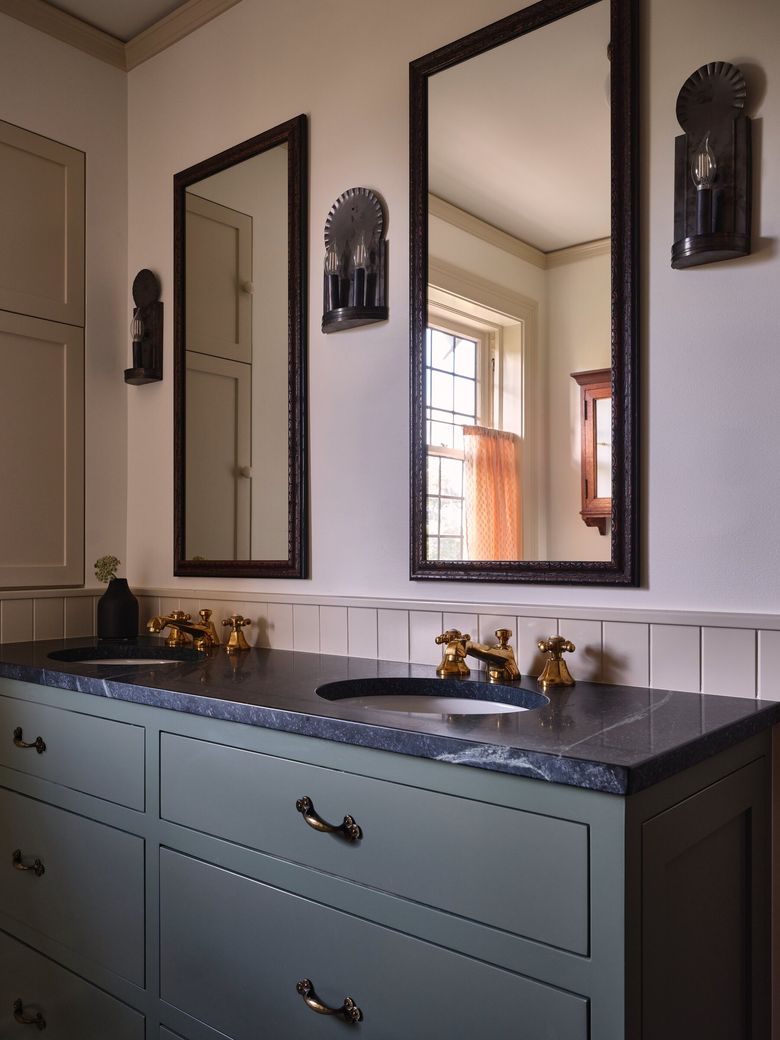
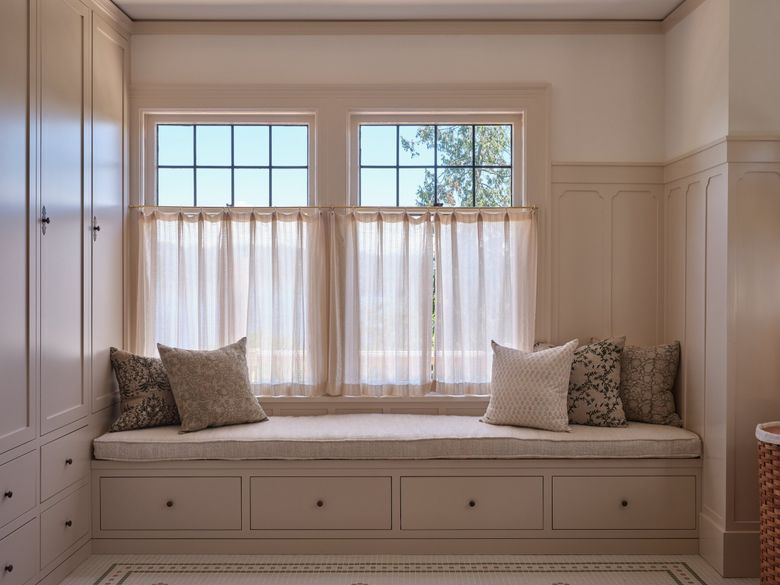
Upstairs, two of the four bedrooms faced Lake Washington, a logical duo to combine into a primary suite. Situating the primary bathroom’s two vanities in front of the existing windows is a time-honored Seattle solution when inserting a primary bathroom into the bones of an old house. Studio TJP Architects also brainstormed ways to create closet space. The one that felt best to Remala and Kamdar: A bank of built-in wardrobes along one wall of their primary bathroom.
Yes, their closet is in the bathroom. “And I love it,” says Remala. Kamdar likes to get up early, Remala says, and it’s nice to get ready for the day without disturbing your spouse.
The unfinished basement was a relative blank slate — though Chandler points out it’s the kind that still needed lots of unglamorous structural work, like moving around gas and water lines. But the finished version provides the big family room Remala and her family were looking for.
The boys have a small TV and gaming room in the attic, she says. “But most of the time they end up downstairs.” The basement location also keeps the TV from becoming a constant background presence in the kitchen above.
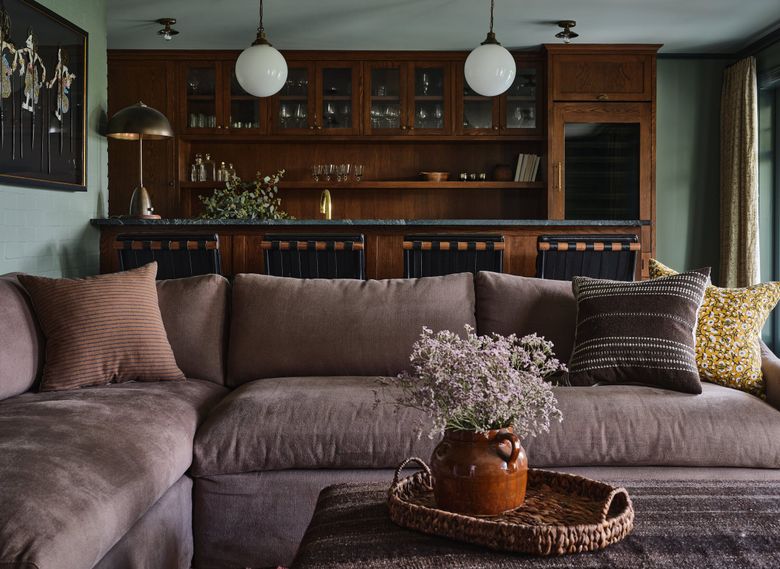
A set of three double doors open to the backyard (a more period-correct approximation of modern bifold doors, the kind that fold up into almost nothing). Heated floors keep the room from feeling too basement-esque. So does the custom-built bar.
Its well-hewn cabinetry stocked with stemware and chilled bottles of white would look at home in a vintage wine bar. But the bar was less about flexing a love for wine or cocktails, and more of a home base for casual entertaining. The family might spread pizza boxes along the counter so everyone can grab a slice, says Remala. “A couple weeks ago, we ordered a bunch of barbecue and put it there.”
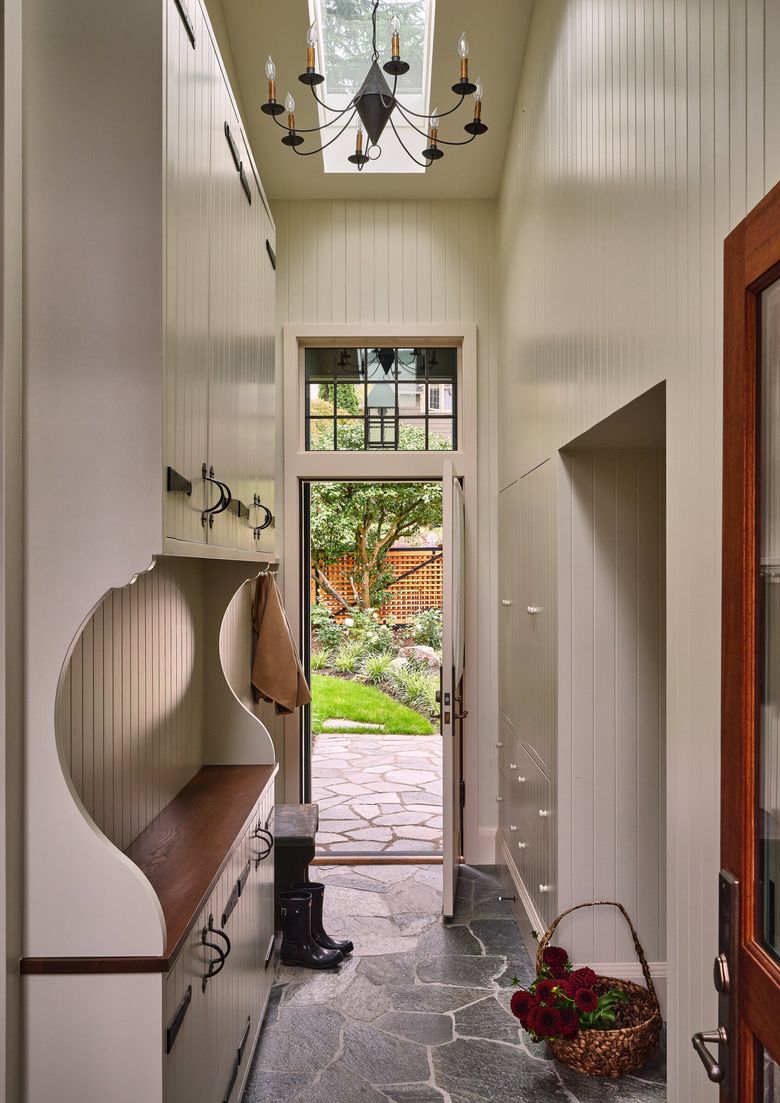
While older homes certainly have mudrooms, especially in the Northwest, modern ones have elevated this coat-filled way station into an art form, tricking them out with benches and custom shelving. Remala and Kamdar’s house already had a detached two-car garage, added in the 1950s. Now it connects to the main house via a mudroom and new entry way. “Oh god, such a game-changer,” says Remala. “That’s how the kids come in and out every day.”
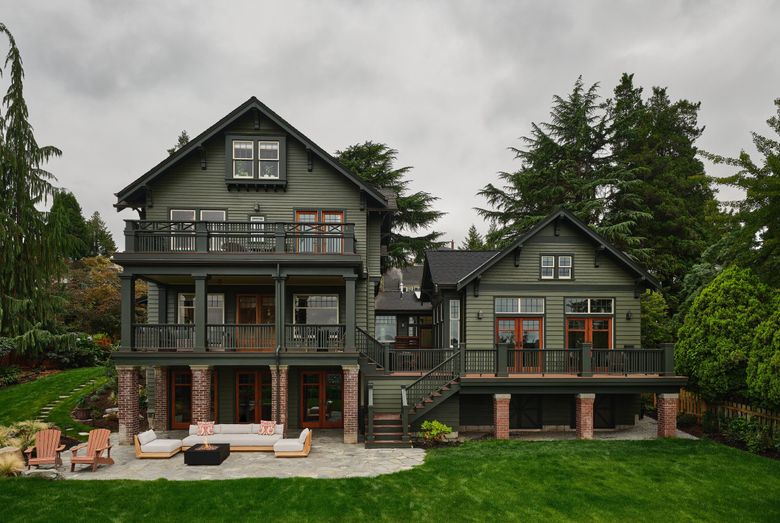
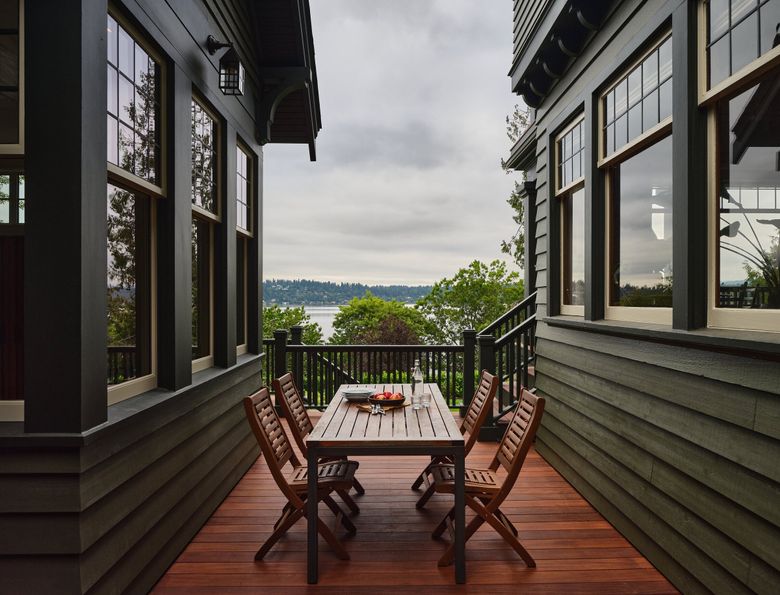
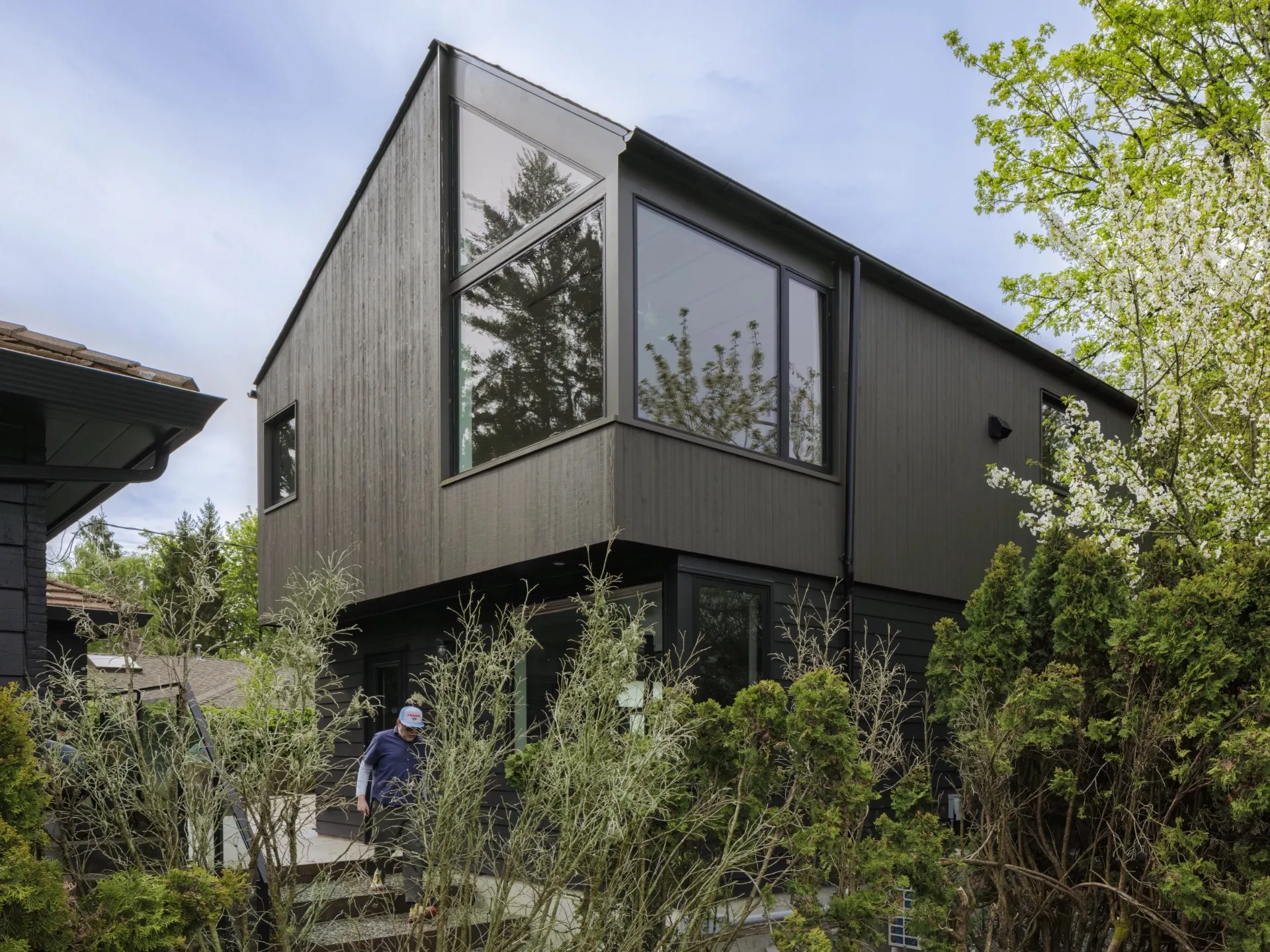
That mudroom is also a point of connection for the other major addition. The couple always planned to have Kamdar’s parents join them eventually. After a few go-rounds on design, they decided on an attached one-bedroom cottage, offering proximity but also privacy. Remala refers to it as the guesthouse, a far lovelier term than “accessory dwelling unit.”
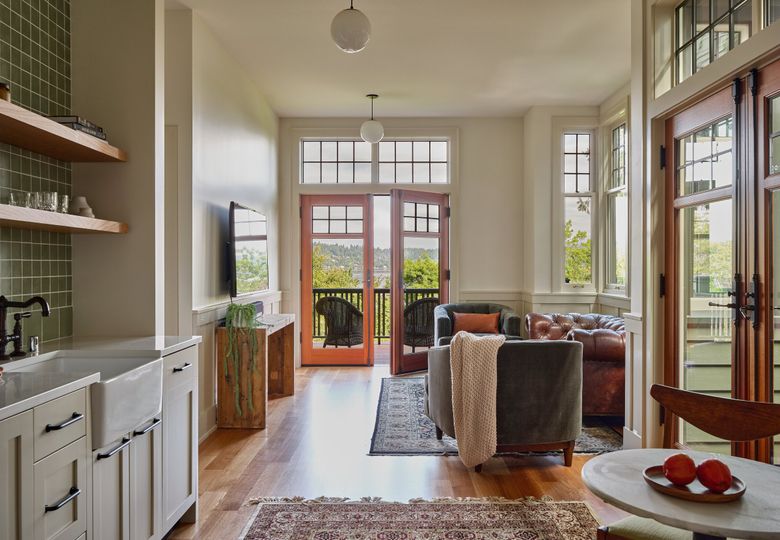
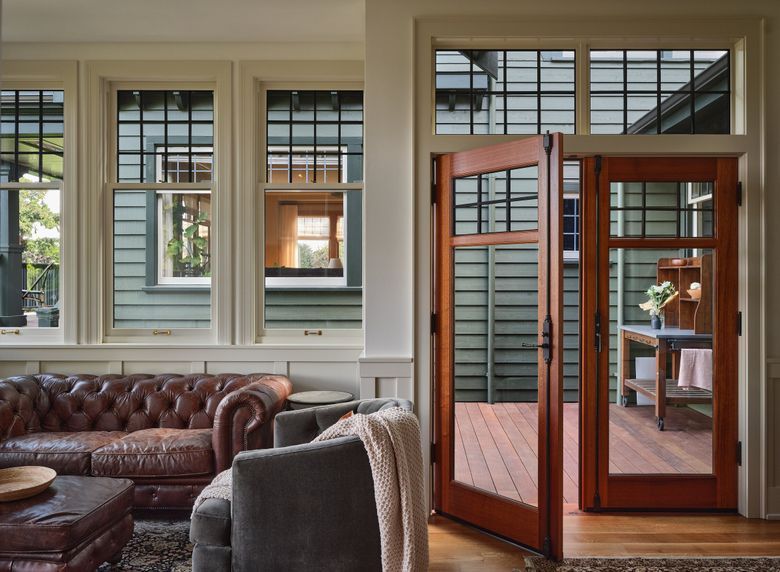
Earlier this year, Kamdar’s parents moved into the cottage. It’s clad in the same siding and trim to blend seamlessly with the main house. The small courtyard between the homes became a pleasant spot for grilling and hanging out in the summer.
Multigenerational living is a classic practice, but the modern version works best with a bit of thoughtful design. Just like the home itself.
Friday’s pick in West Seattle
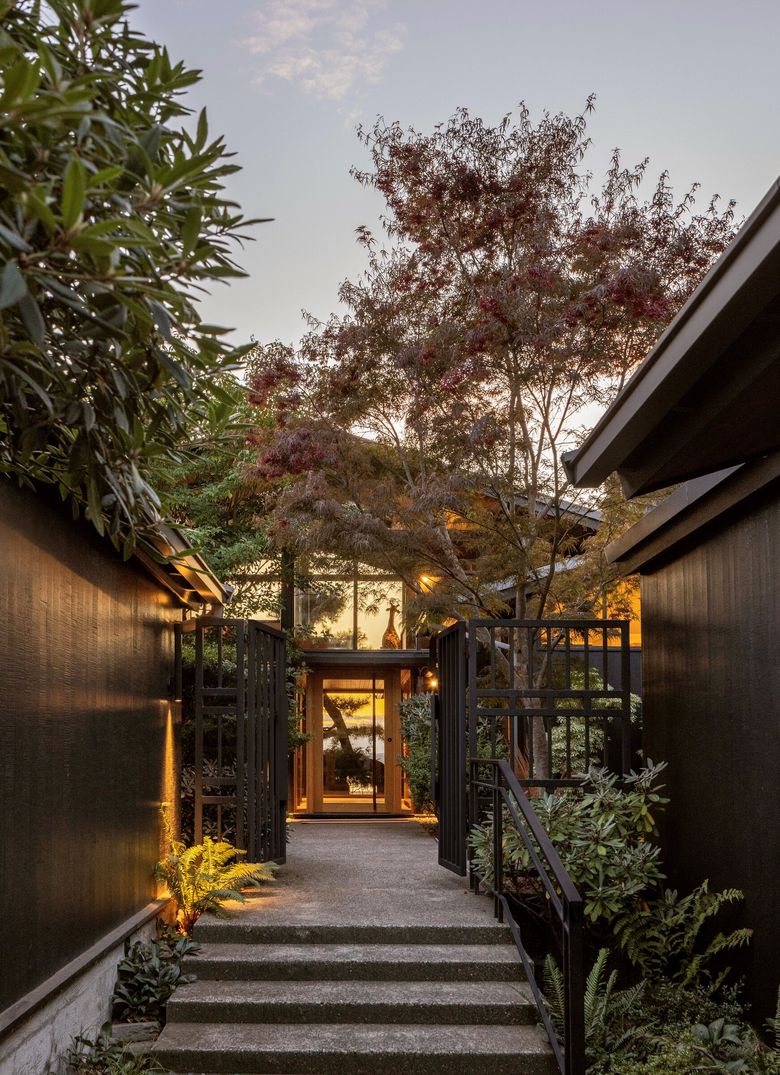
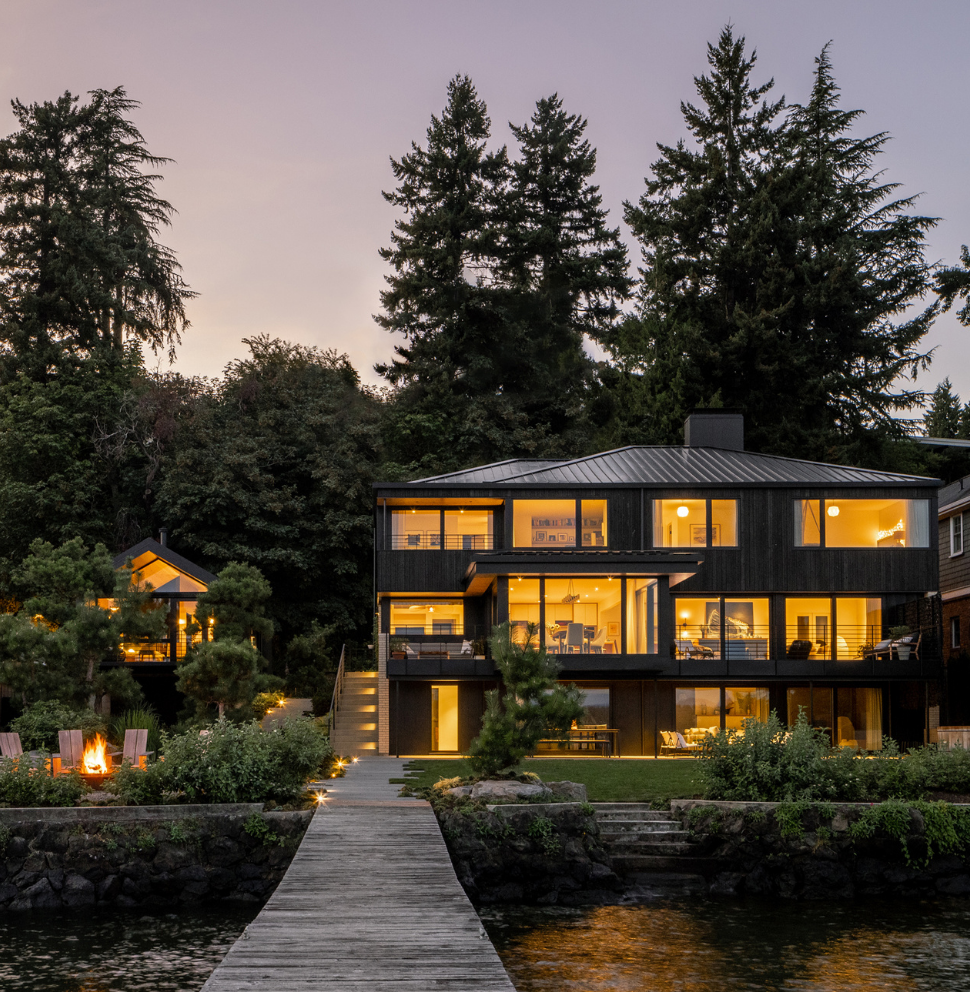
IF IT WEREN’T for Friday the French bulldog, Paul Midgen and Kirsten Adams and their daughter, Lark, might not witness nightly sunsets during dinner prep, or watch the fog roll in from the Puget Sound from the vantage point of their dining room table. They certainly wouldn’t live in a home designed by influential midcentury architect Albert O. Bumgardner.
Friday joined the family back when they lived in the Mount Baker neighborhood, right around the time Midgen spotted an intriguing-looking home on Zillow, though it was out of their price range, not to mention in West Seattle, a neighborhood they didn’t know.
Eventually Midgen took Friday for a checkup at a vet that specializes in, as Midgen puts it, “short, snout-y dogs.” Lien Animal Clinic in West Seattle wasn’t far from that house he’d been admiring. What was the harm in just driving by?
From the street, Midgen couldn’t see much besides a carport and some very well-tended gardens, but he marveled at the area’s views of Puget Sound as Friday snored next to him on the passenger seat. His casual interest in the property swiftly bloomed into a full-blown Zillow-refreshing obsession.
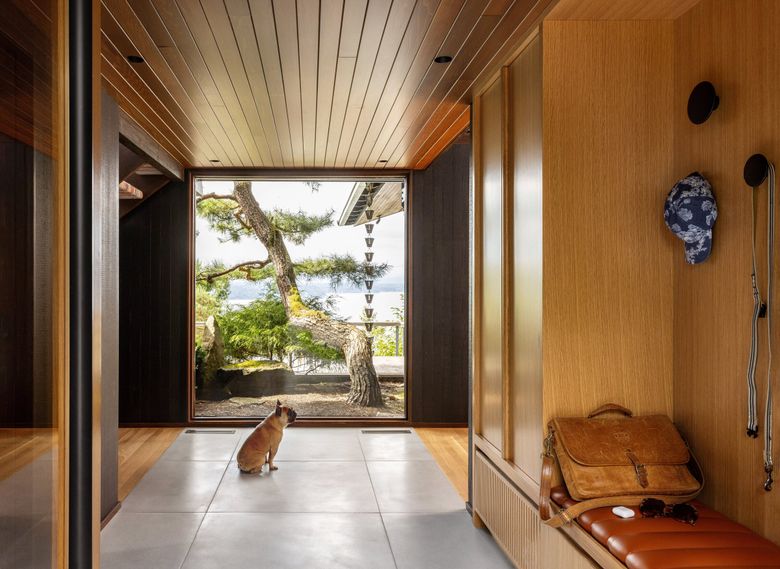
When a subsequent price drop put the home within striking distance, Midgen and Adams discussed whether they were truly ready to own the kind of home you just can’t build anymore, from the structural beams of old timber to its perch on a 300-foot bluff (modern-day Seattle zoning requires a buffer between a home and steep slopes). They’d need to maintain the landscaping designed by a master gardener years back, not to mention a nearly 70-year-old home where some walls consist of large pieces of glass held in place by wood frames.
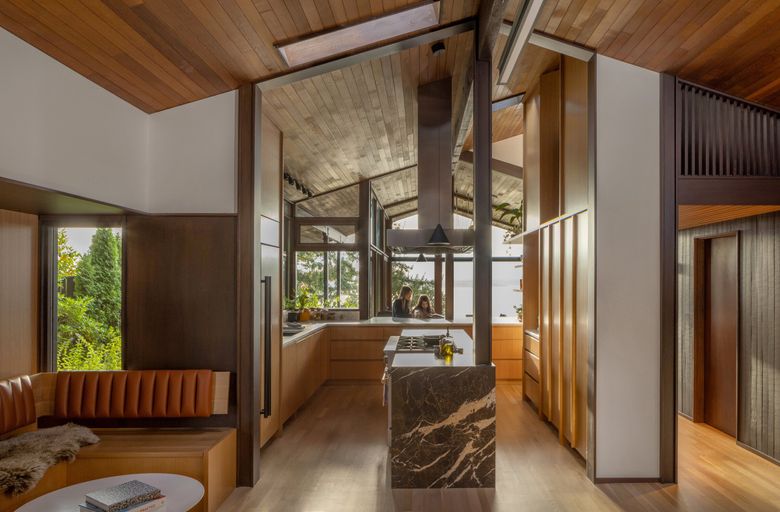
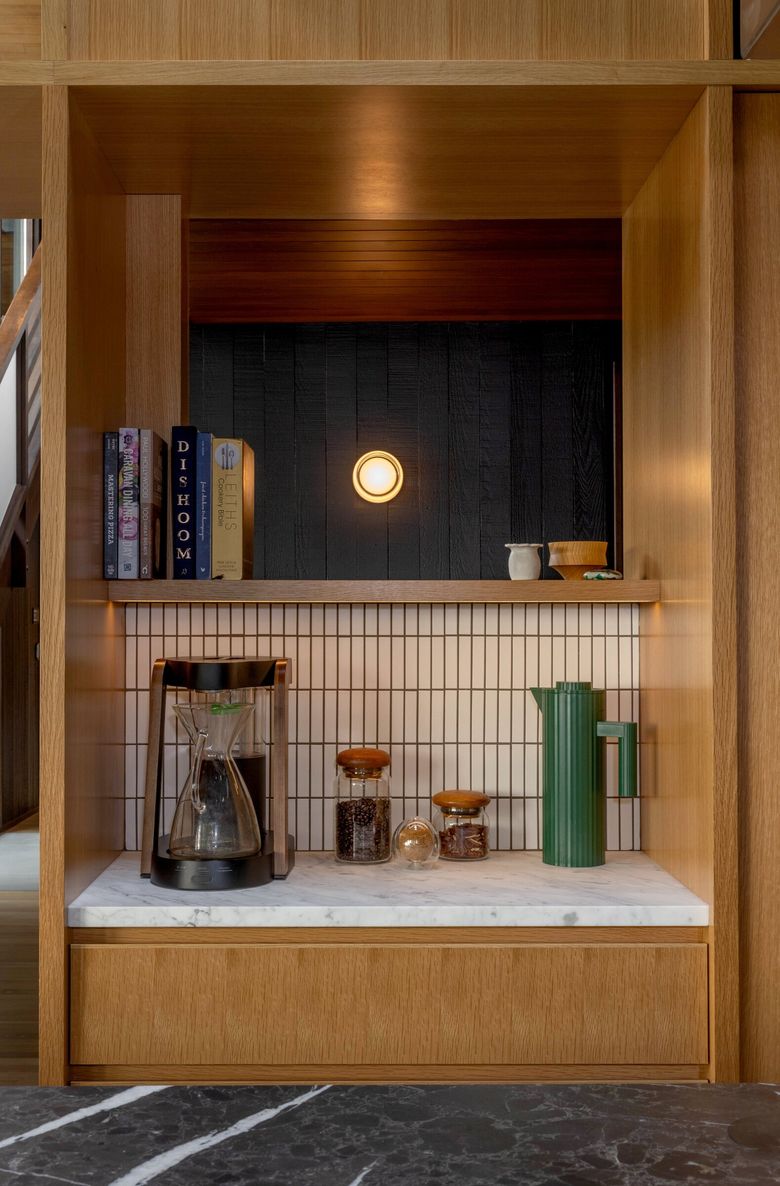
It was a lot to consider for two adults who, by Midgen’s admission, sometimes struggle just to keep their kitchen clean. Given its history, says Adams, they wouldn’t just be living there. “We realized we would be stewards of this house.”
That doesn’t necessarily mean living in a museum. The home harbored a few architectural relics that hadn’t aged well, like the kitchen cabinets blocking those amazing views. Closet space? Minimal. A sunken fire pit in the living room could have retro appeal … except the fireplace’s back wall opened into the primary bedroom. An adjacent brick column between the rooms didn’t go all the way up the ceiling. Not exactly ideal for privacy. A few previous remodels had chipped away at the period charm.
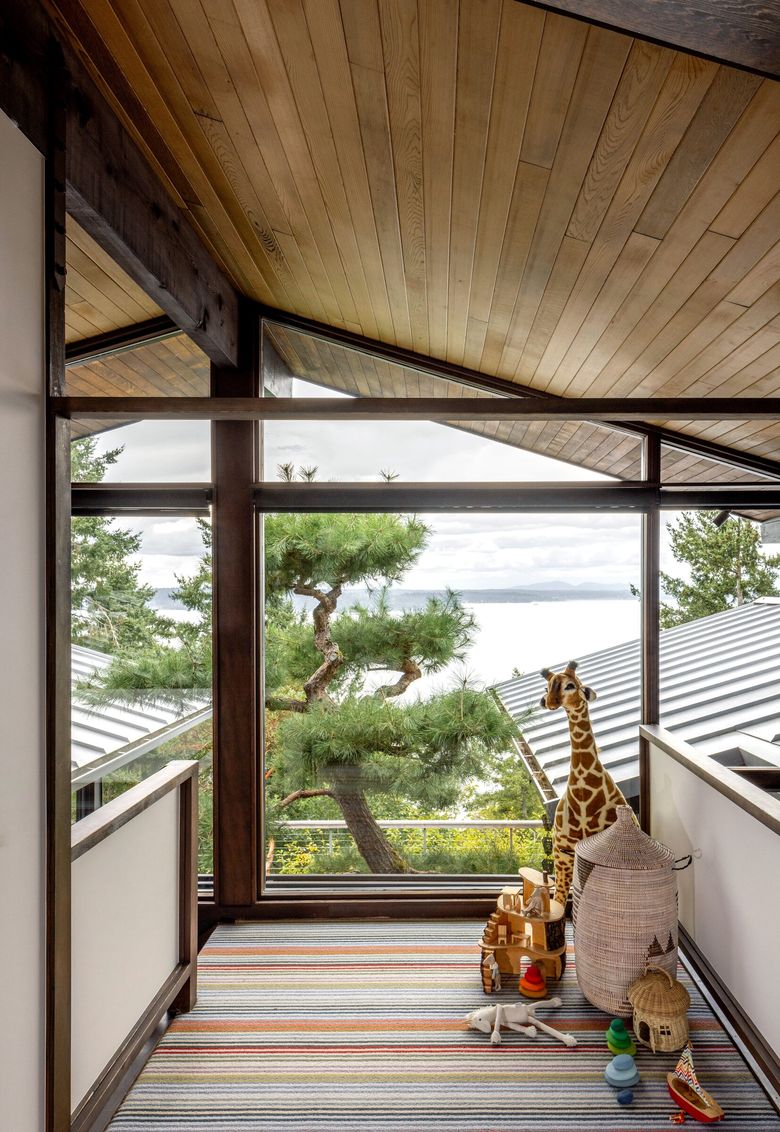
“It was a very experimental era,” says project lead Kyle Keirsey of SHED Architecture + Design, the guy tasked with modernizing while also reinvigorating the home’s midcentury identity. Open floor plans were a new idea. In the case of that column, which a proper architect might refer to as a monolith, “there was no acoustical separation at all.”
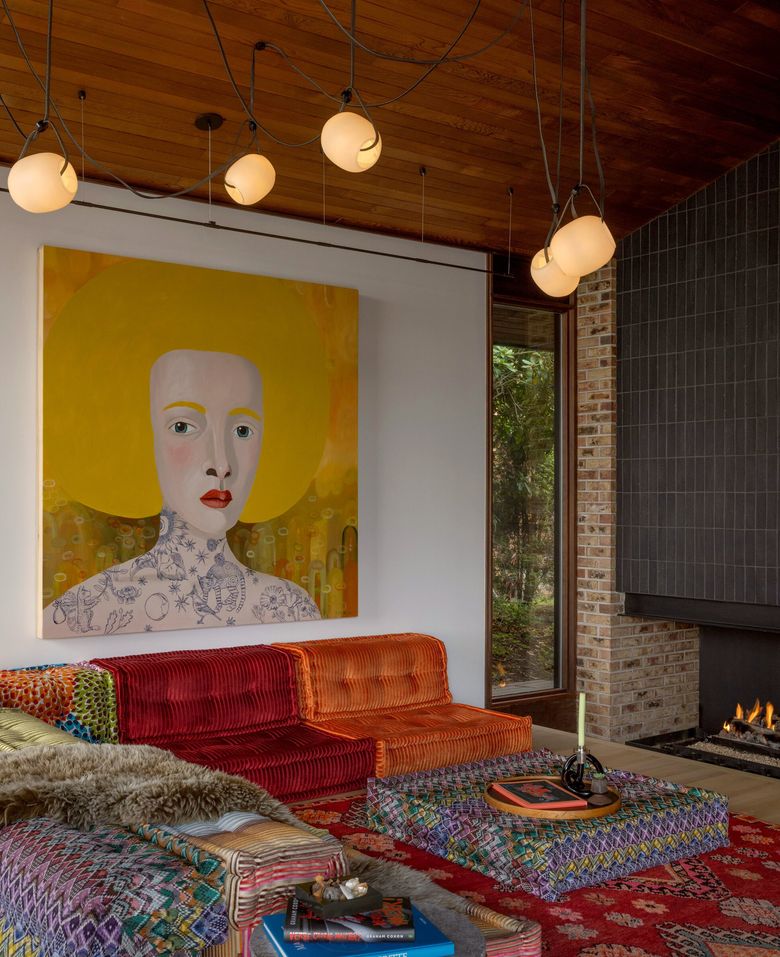
A column of glazed black brick on the bedroom side of that open fireplace ended the peekaboo situation from the living room but kept the idea of a hearth. Some glass atop the brick column, er, monolith, blocks sound but lets light circulate.
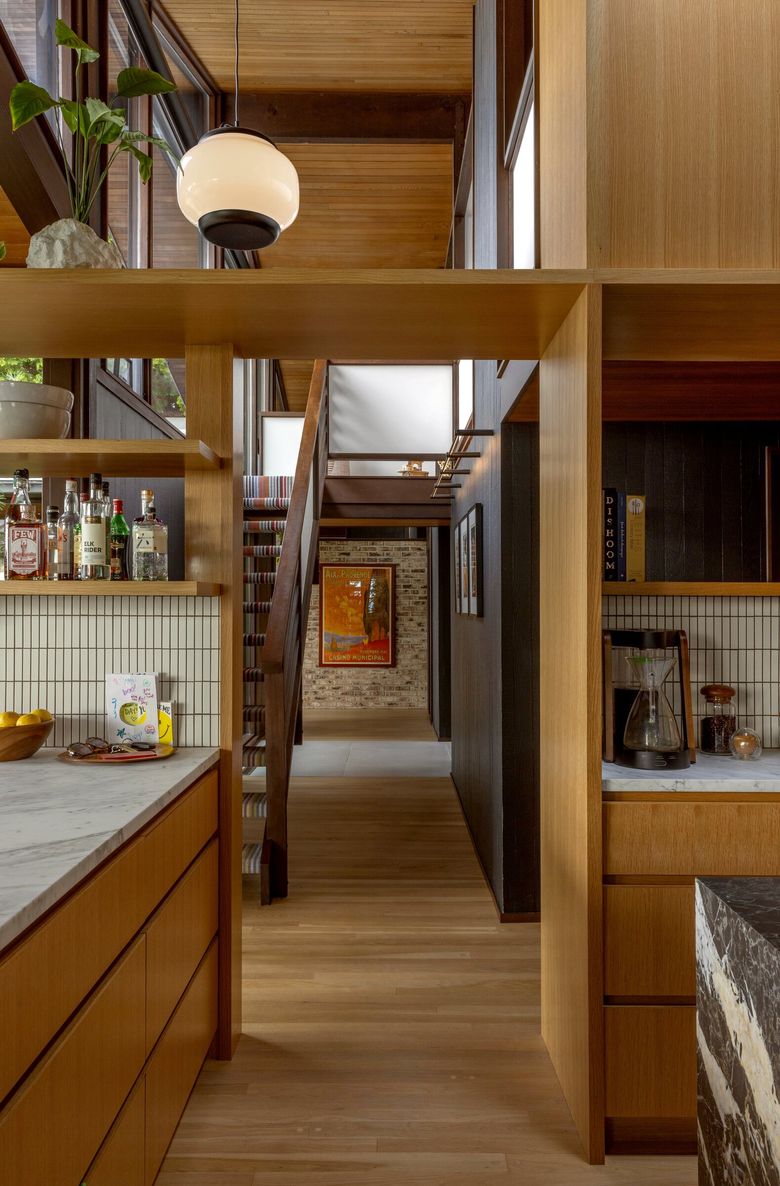
A 1959 feature on the house in The Seattle Times notes Bumgardner’s theory that “a dramatic view is best enjoyed in day-by-day living when it is parceled out.” Removing a wall in the kitchen made the room part of the house’s overall flow and parceled those views out a bit more liberally.
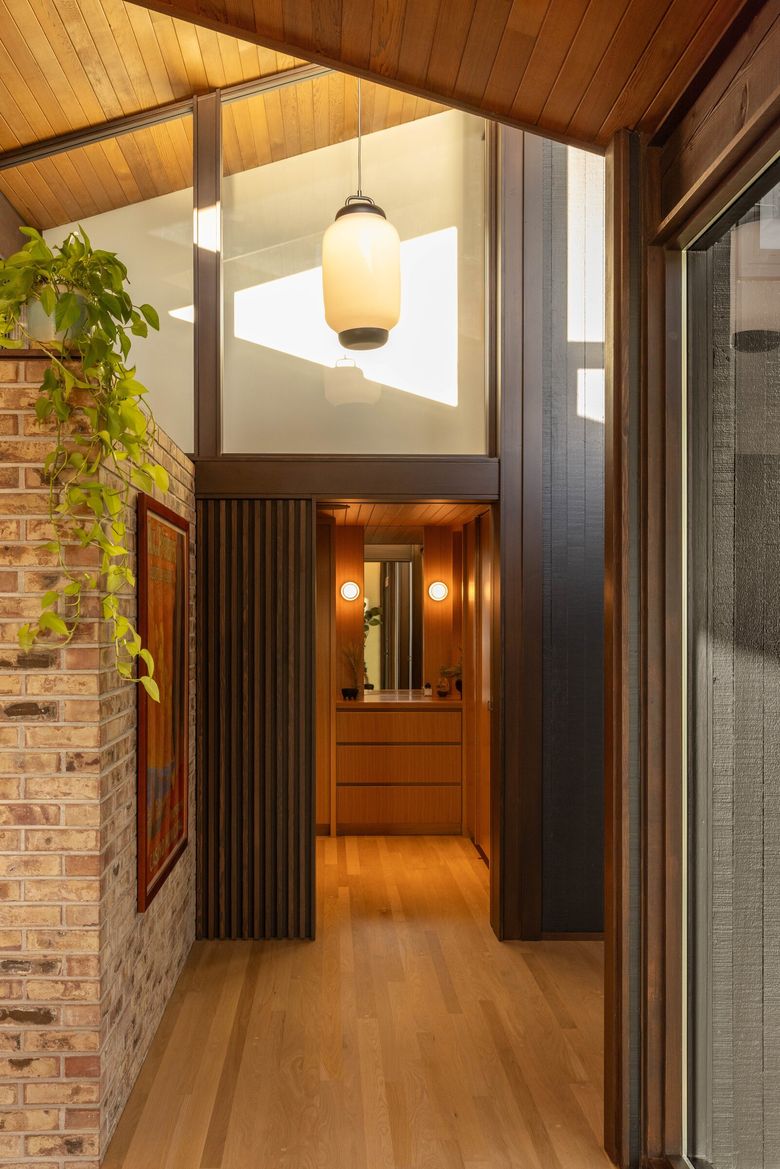
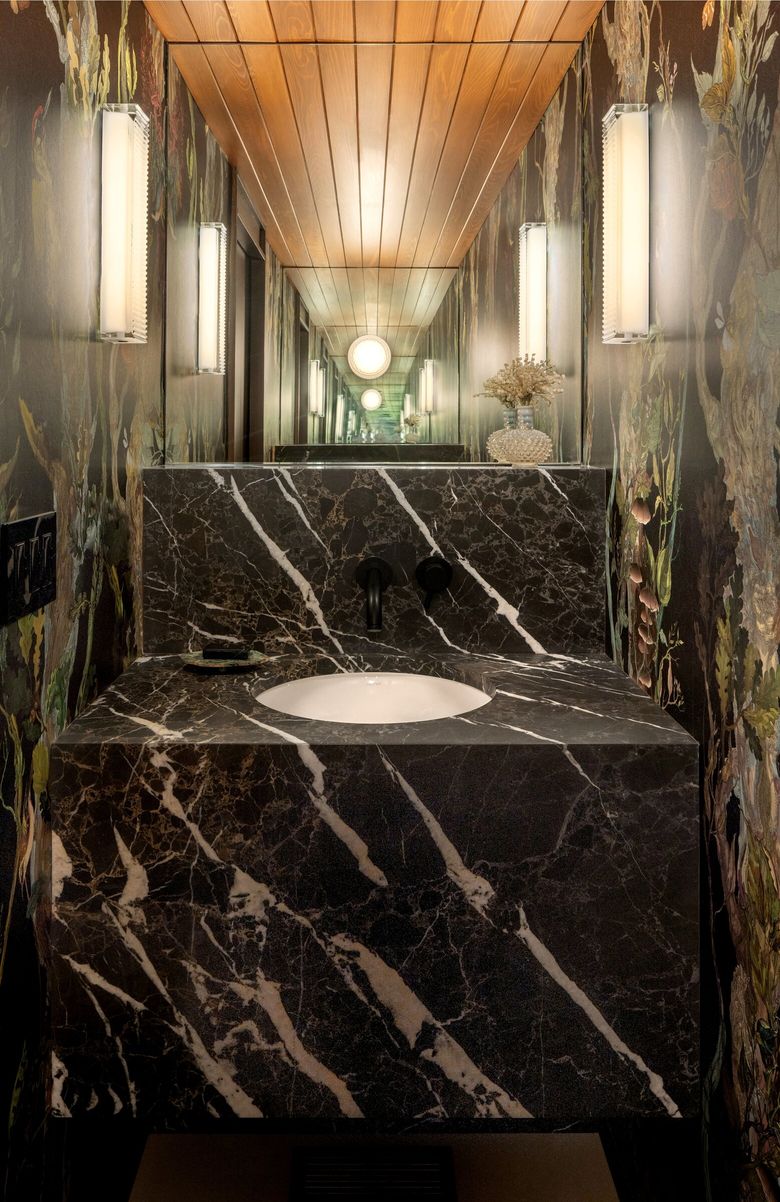
Enlarging the primary closet required flexibility and a bit of Tetris. Today a walk-in closet forms the entrance to the bedroom, carved out of a former scrap of hallway; it’s carefully arranged so all a visitor sees from the front hall is a mirror flanked by sconces.
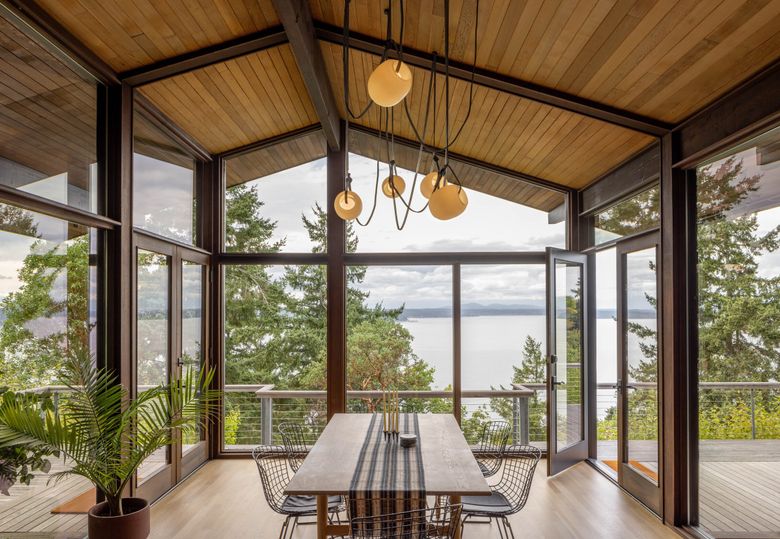
The only real downside? “I’m still a little bit of a person who takes their pants off and leaves them on the floor,” says Adams. “I have to be an adult and commit to picking up after myself.”
Keirsey brokered a three-way design treatise between Bumgardner’s original palette of fir and cedar and Midgen’s and Adams’ divergent aesthetic tastes. She favors bold, graphic elements; he likes stark contrasts and natural materials. (No surprise, since he works in technology and she has a background in design.)
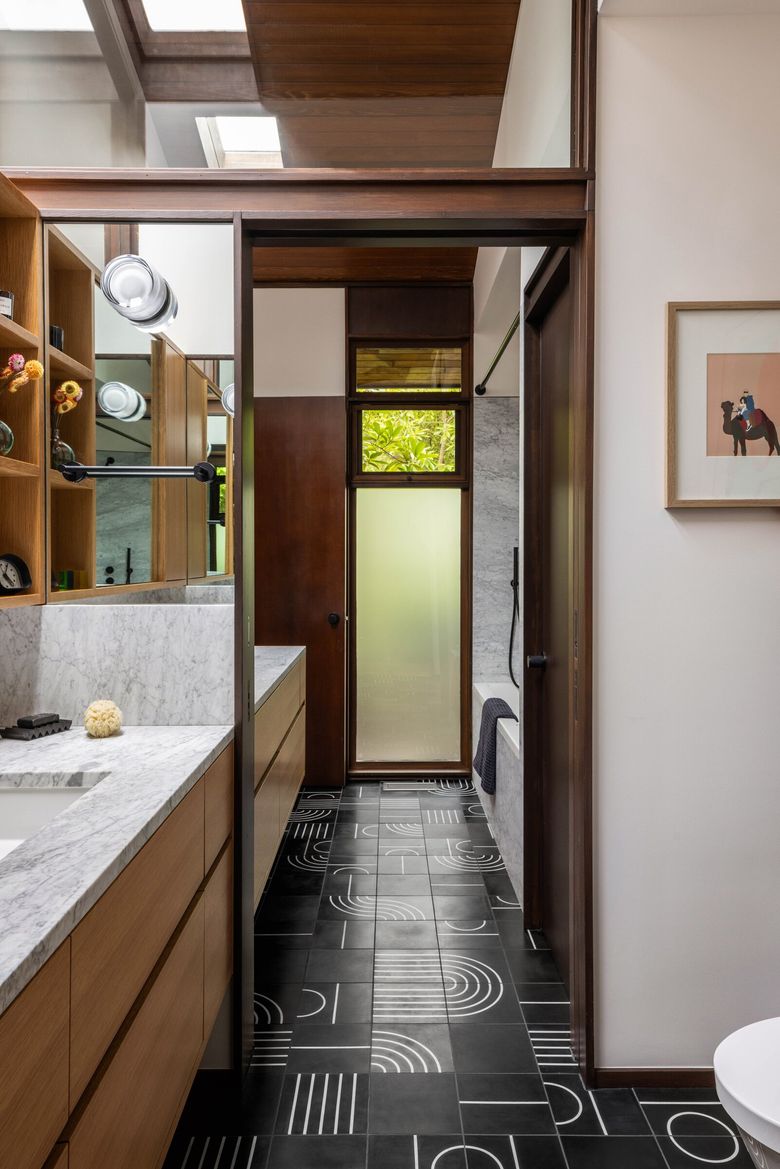
“Kirsten’s the one who understands art,” says Midgen. He appreciated Keirsey’s championship-level ability to take her ideas and translate them to proper expressions of architecture and design, executed by Ambrose Construction. They kept the finishes neutral and saved pops of color for art and furniture — elements that are easier to replace down the road than cabinets or tile.
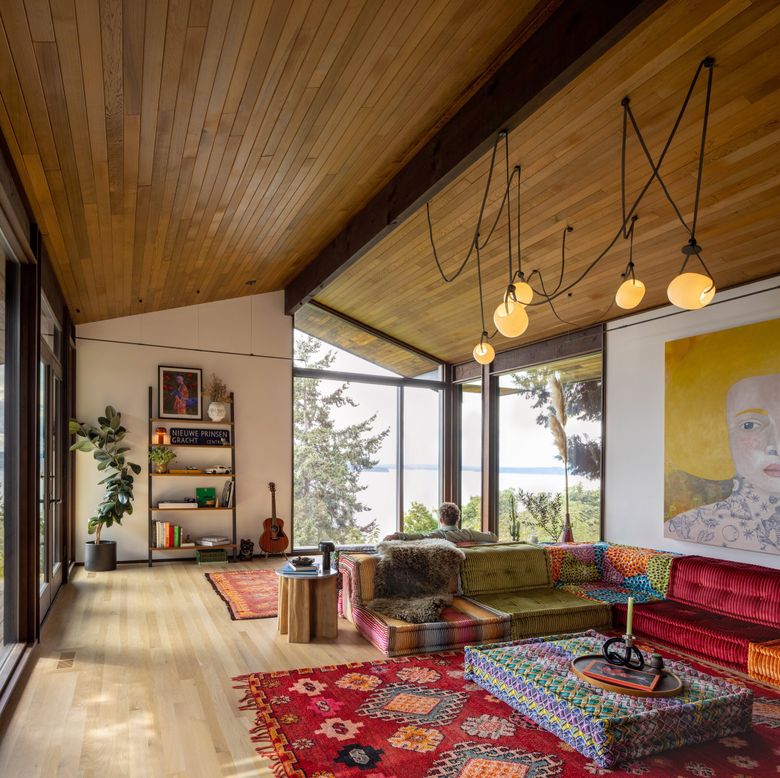
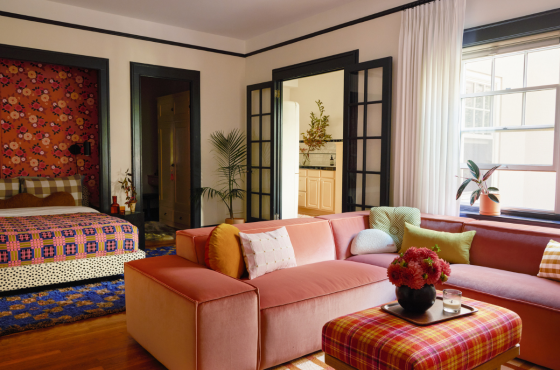
Midgen’s data-oriented brain wasn’t originally sold on the multicolor low-slung sofa in the living room that reminded Adams of their travels in Morocco, or the idea of a large, bold painting commissioned from artist Anne Siems until he saw it in a rendering. (The SHED team even provided 3D renderings that included clothes, books and small piles of mail — the evidence of daily life that’s often incompatible with minimalist open layouts.)
Now that room, relatively colorful compared to the rest of the space, is his favorite place in the house, he says. Here, he can take a moment in the morning to look out on the expanse of views. “A cup of coffee, the house is quiet, just first light: That’s the stuff dreams are made of right there.”