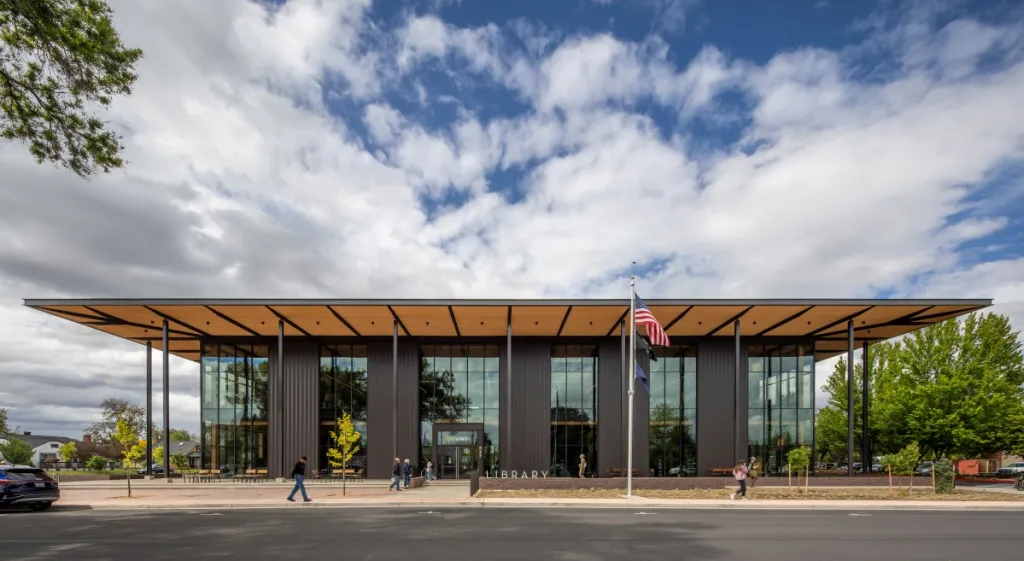
Redmond, Ore.’s new library is bigger, clearer, and easier to use. In downtown Redmond, Deschutes Public Library’s two-story Redmond Library—designed by The Miller Hull Partnership with local firm Steele Associates—more than doubles the size of the former branch and organizes flexible, visible spaces for reading, making, meeting, and everyday drop-in use.
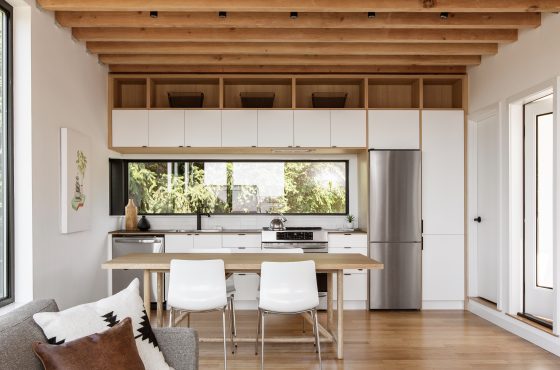
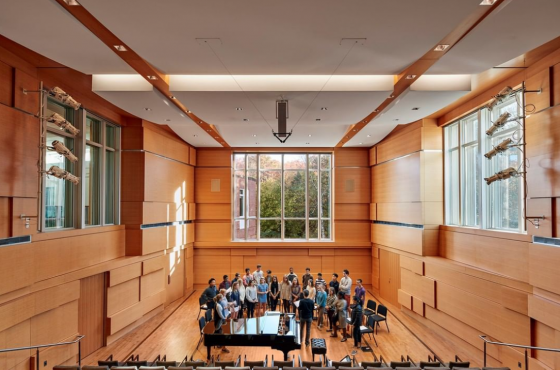
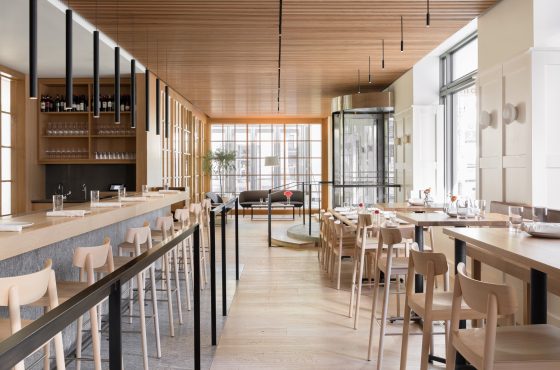
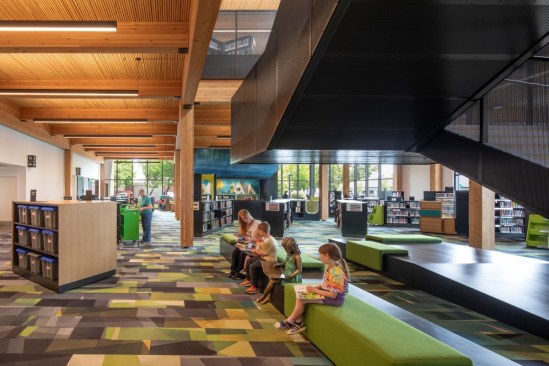
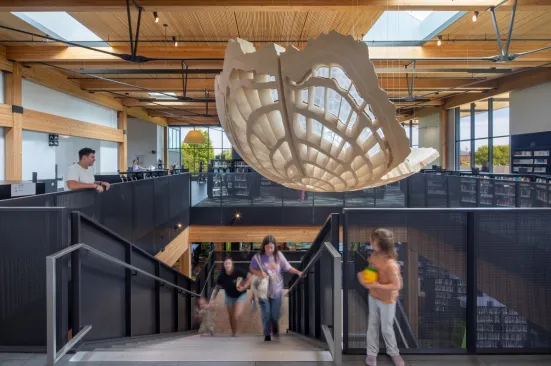
The project’s mass timber structure is central to that approach. Exposed wood columns, beams, and ceilings give the interior a clear framework and a warm material baseline. In Central Oregon, the structure also serves as a visible reminder of the area’s economic history, when the logging and milling industries shaped towns across the region, including Redmond.
Credit: Lara Swimmer

Program planning grew from extensive community engagement. The design team cites input from a wide mix of residents, including families, seniors, unhoused people, LGBTQ+ and Latinx community members, and advocates for the arts and outdoor recreation. That feedback shows up in the variety of spaces and the way they can change over time: a Children’s Discovery Space, a dedicated teen area, a maker space intended for all ages, and meeting and co-working rooms designed for different group sizes and schedules. Mobile furniture and shelving support those shifts, allowing staff to reconfigure areas for events, classes, and everyday use.
Credit: Lara Swimmer
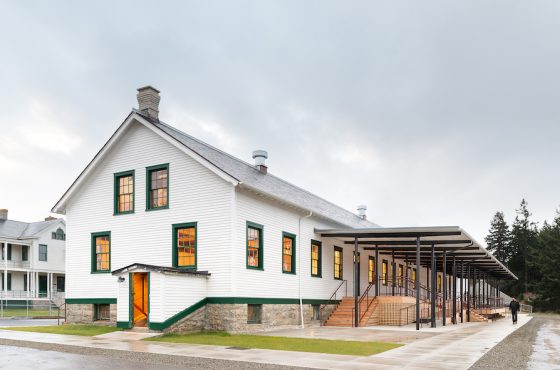
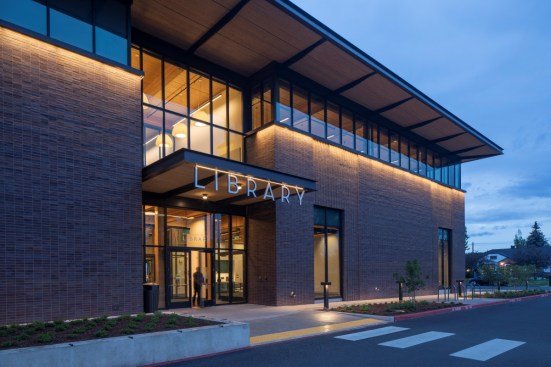
The building’s exterior is organized into two primary volumes under a continuous roof. A brick-clad north volume aligns with the scale and material character of downtown and the nearby civic context. A south volume—glass and metal—opens the interior to daylight and views.
Credit: Lara Swimmer
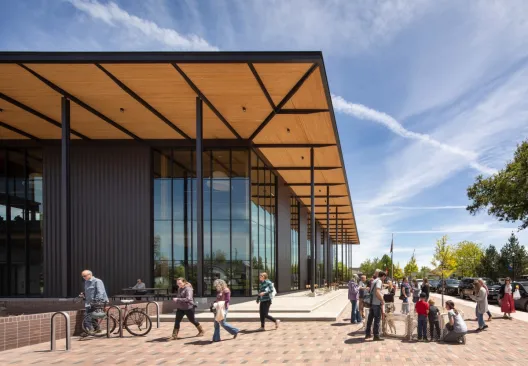
The site design extends the library’s role beyond its walls. A civic plaza and covered porch can host outdoor programming and informal gathering. The porch creates a sheltered edge that can support multiple uses at once.
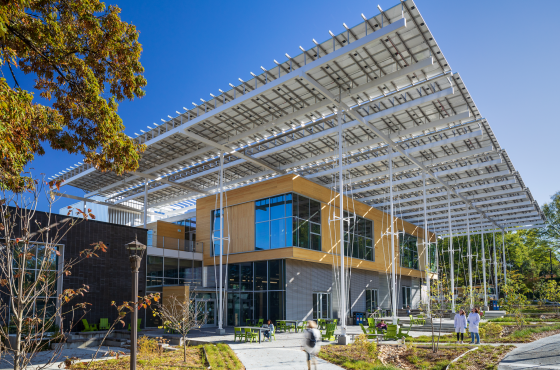
The library is all-electric and includes a rooftop photovoltaic array sized to meet 100% of annual energy needs, positioning the building as net-zero energy, and features a system of builder controls shared across Deschutes Public Library network to streamline maintenance and operations. The team also reports reducing concrete quantities and specifying lower-impact mixes that cut the material’s global warming potential by 30%.
Inside, acoustics are addressed with dowel-laminated timber ceiling panels that allow the wood to remain exposed while meeting library sound requirements.
Credit: Lara Swimmer
Regional art includes an overhanging sculpture by Pacific Northwest artist John Grade, inspired by the cellular structure of Central Oregon sagebrush and the obsidian flows of Newberry Caldera.
Practical access is addressed, too: a drive-through book drop and staff window allow patrons to pick up holds and return materials without leaving their vehicles.
The result is a library that serves as a flexible piece of public infrastructure—one that uses mass timber as both structure and signal. In a region shaped by timber work and now defined by growth and change, the building makes the case that civic space should be adaptable, durable, and built with materials that connect to place.