TURN OFF THE MAIN STREETS in the neighborhoods framing Lake Union and Portage Bay, and the urban din gives way to the buzz of seaplanes and boat motors. Kayaks and paddleboards take the place of Lime bikes and scooters, and pavement and sidewalks transition to creaky wooden docks that stretch over the water. Peering through the trees along the shore, views of colorful homes of every style come into focus, floating side by side on the calm lake waters.
Here history and modern living collide.
Beginning in the mid-19th century, people in Seattle started taking up residence not next to the water, but on top of it. The earliest floating homes were simple shacks floating on logs, but many of today’s versions have gotten a necessary glow up, becoming bigger, more stable and, in many cases, some of the most intriguing real estate in the city.
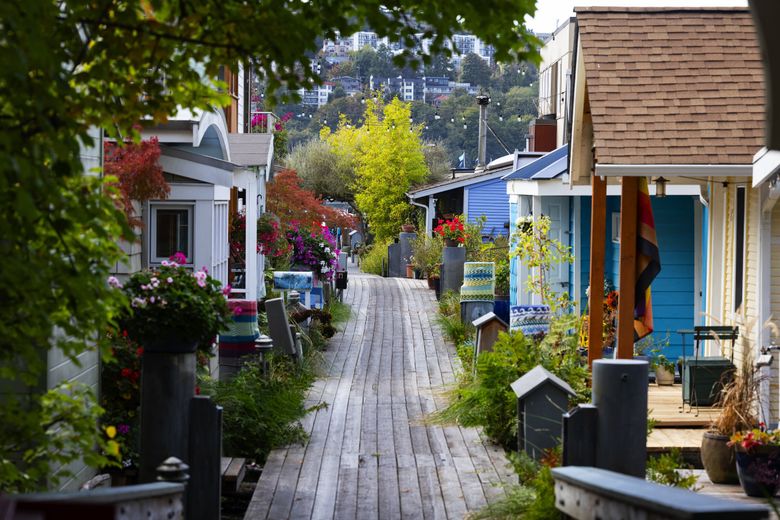
One of the many private docks in Seattle’s Eastlake neighborhood. Some floating home residents say stepping down to their docks takes them to a quiet oasis even though the city’s noise and chaos are close by. (Ken Lambert / The Seattle Times)
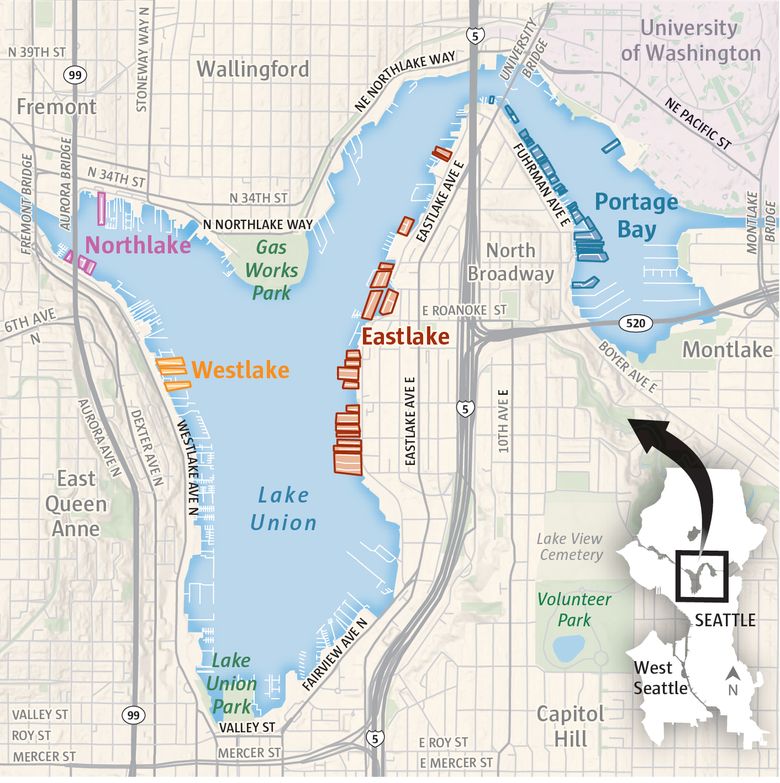
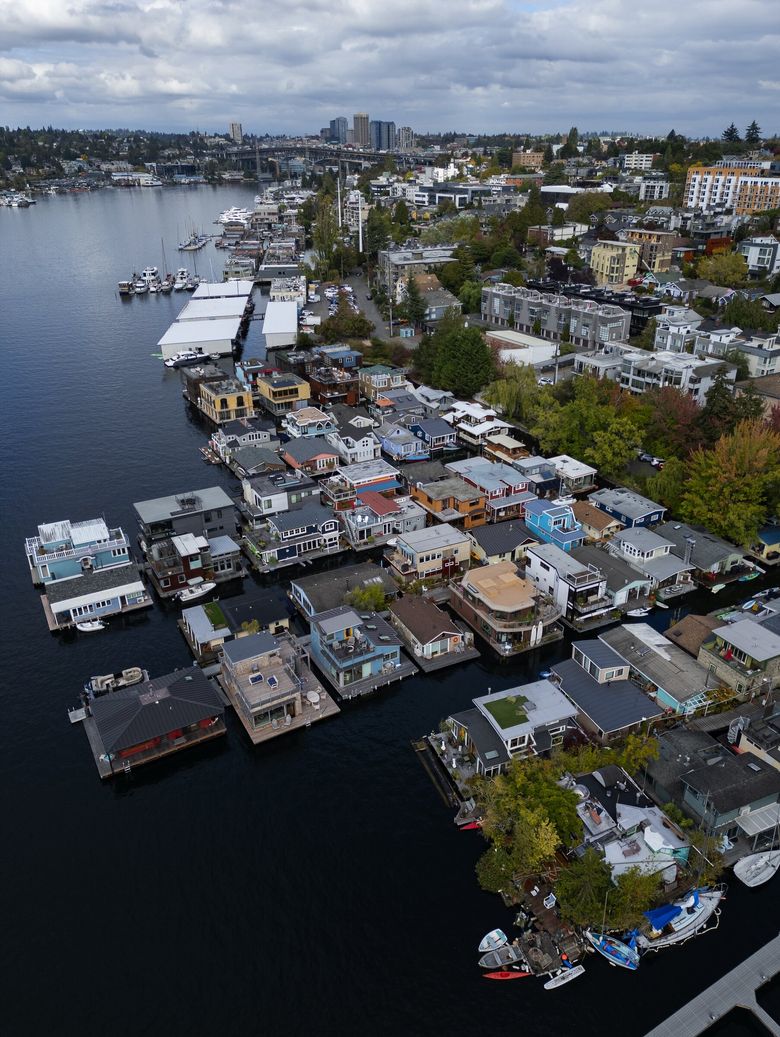
Seattle’s floating home community is made up of four distinct areas: Eastlake, Westlake and Northlake on Lake Union, and Portage Bay facing the University of Washington. A total of 507 homes are currently organized around 70 docks.
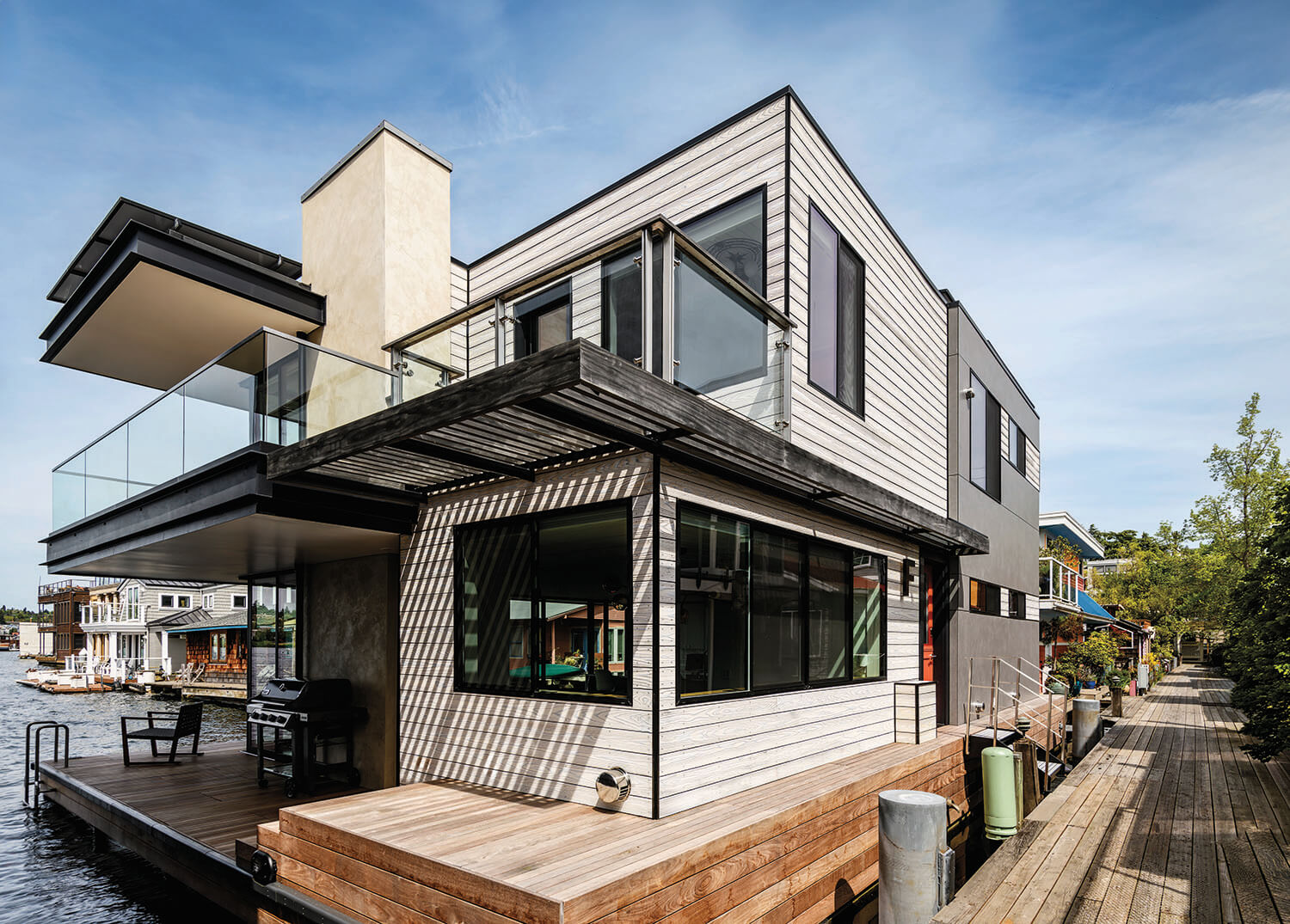
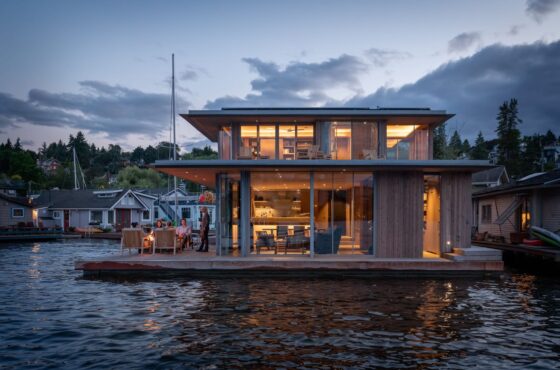
As a new generation of residents moves in, the design of floating homes is evolving as decaying, and sometimes sinking, residences are rebuilt. The new spaces feel modern — but with a dash of the quirkiness and free-spirited nature that have always made this community unique.
Seattle’s floating homes
The community is made up of four distinct areas with 70 docks and 507 residences.
A Turbulent Past
“‘Sleepless in Seattle’ may have made the city’s floating homes and houseboats globally famous, but they’ve long been a crucial and colorful part of its history,” writes Seattle historian Adam Woog in his 2025 book, “Still Afloat,” which traces the history of Seattleites living on water.
According to Woog, Seattle’s earliest floating structures dated from the 1880s and supported the region’s rapidly growing logging industry, serving as sleeping quarters and cookhouses for laborers. These crude structures were often built out of scrap lumber and floated on rickety rafts made from lashing together massive cedar logs. Cedar was the wood of choice because it doesn’t get waterlogged as quickly as other local wood species.
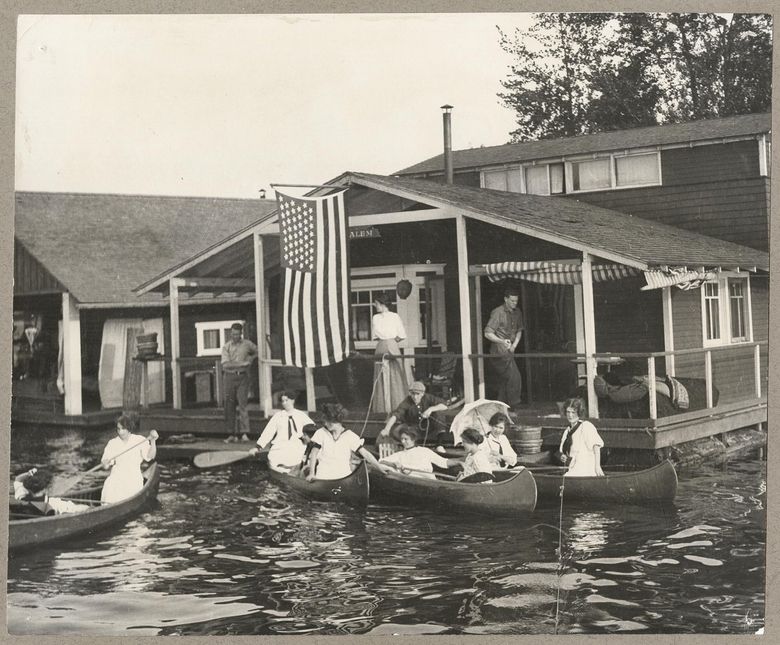
Canoes gather at a floating home on Lake Washington in 1912. As regulations and location restrictions increased over the years, the number of floating homes in Settle dropped from as many as 3,000 homes to fewer than 1,000…. (MOHAI, SHS9025)
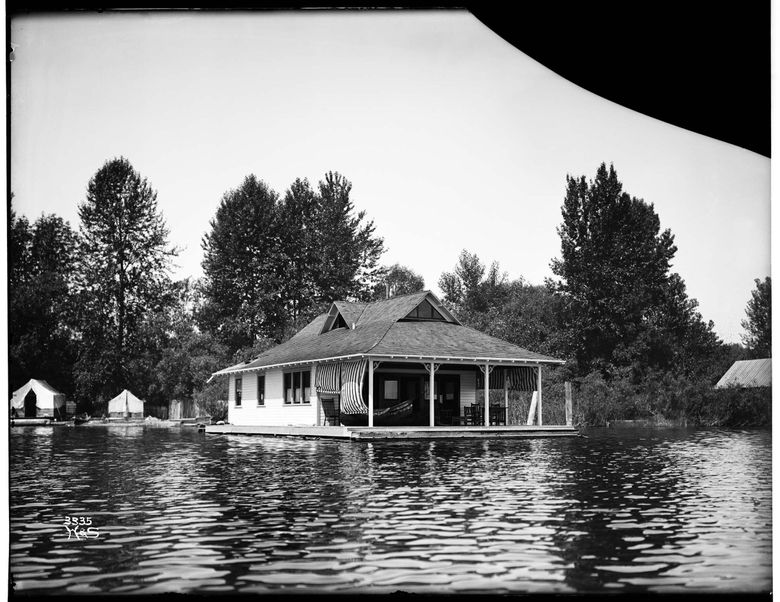
By the turn of the 20th century, people from all walks of life made their way to water-bound living, and, as the decades went on, Seattle’s floating home community came to represent a convergence of many different lifestyles and types of construction.
In the prohibition era of the 1920s, homes on the water became a hotbed for bootleggers and moonshiners who found it easier to evade law enforcement there. Floating speakeasies could paddle over to a different dock during raids, or simply toss their liquor stockpiles overboard.
“Lake Union may have more bottles of booze lining its floor than anywhere else in the world,” Woog says.
Vintage bottles are kept at the Keasler Cottage, which serves as the Floating Homes Association’s headquarters. Set on Lake Union in the Eastlake… (Ken Lambert / The Seattle Times)
Back in those days, unlike today, there were floating homes on Lake Washington near Madison Park. Those tended to be more above board, their larger size and sturdier constructions reflecting their frequent use as summer houses for the elite.
At its peak in the 1930s, Seattle had more than 2,000 floating homes, with some estimates putting the number closer to 3,000, all of which were exempt from city ordinances and regulations until the 1950s. But by the early 1960s, restrictions and regulations increased and the number of floating homes dwindled to fewer than 1,000.
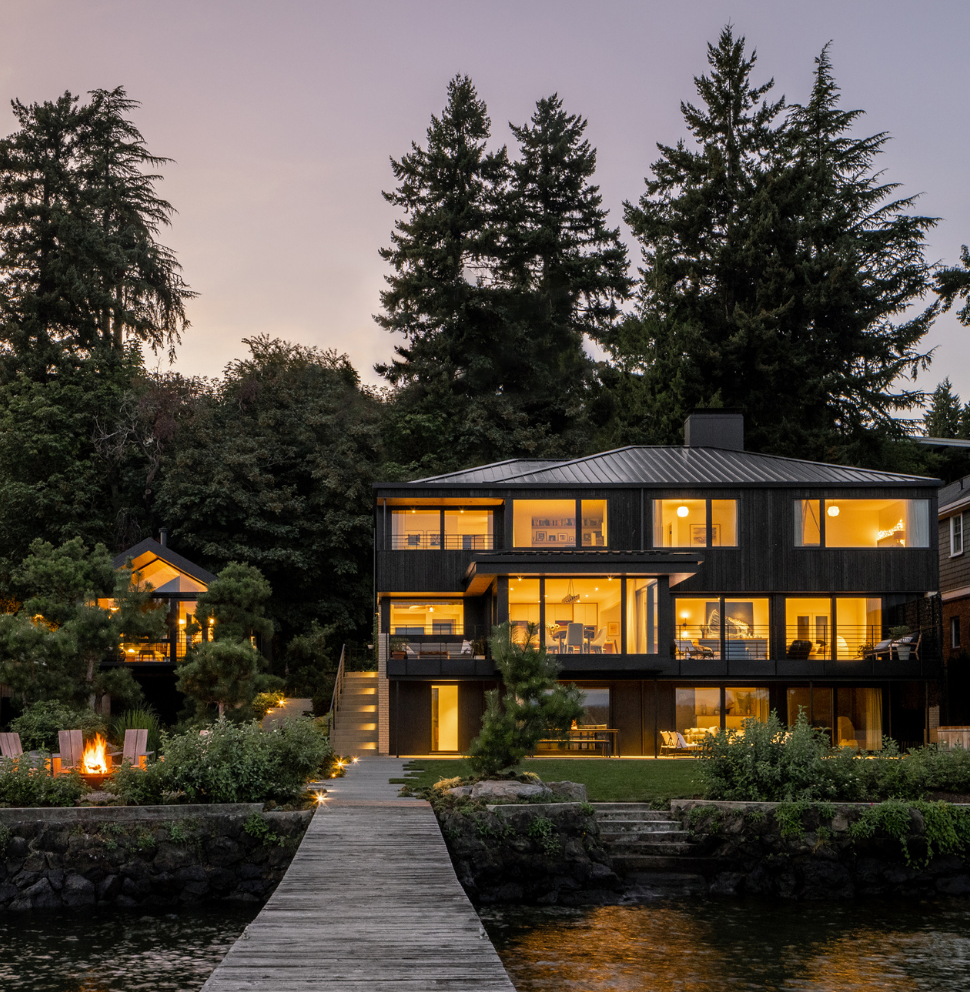
Now they’re governed just as any other Seattle neighborhood. And yet the floating home communities dotting our waterways still feel bohemian and a bit unorthodox. It’s not uncommon to see brightly colored floating homes capped with flags, hand-built weather vanes, and other curios, their decks crowded with kayaks and paddleboards. The homes come in all shapes and sizes, from one-room shingled cottages to sleek, multistory modern homes wrapped in glass.
Adam Woog, left, the Floating Homes Association’s resident historian and Stafford Green, the group’s president, meet at Keasler Cottage. Both Woog and Green live on floating homes. (Ken Lambert / The Seattle Times)
Staying Afloat
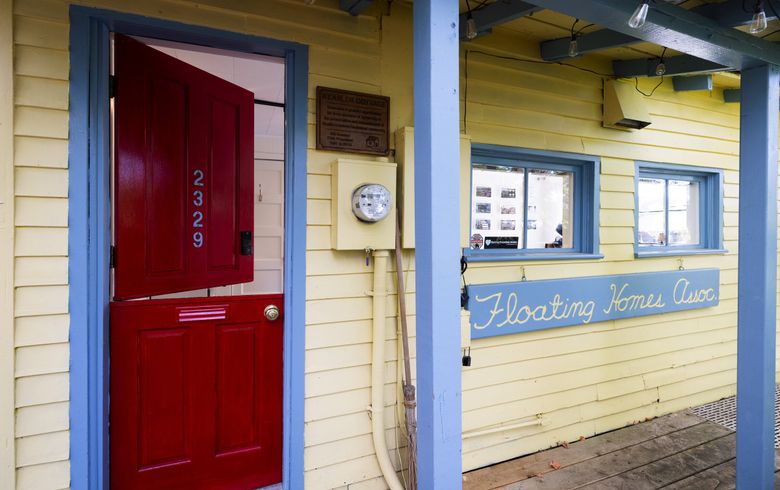
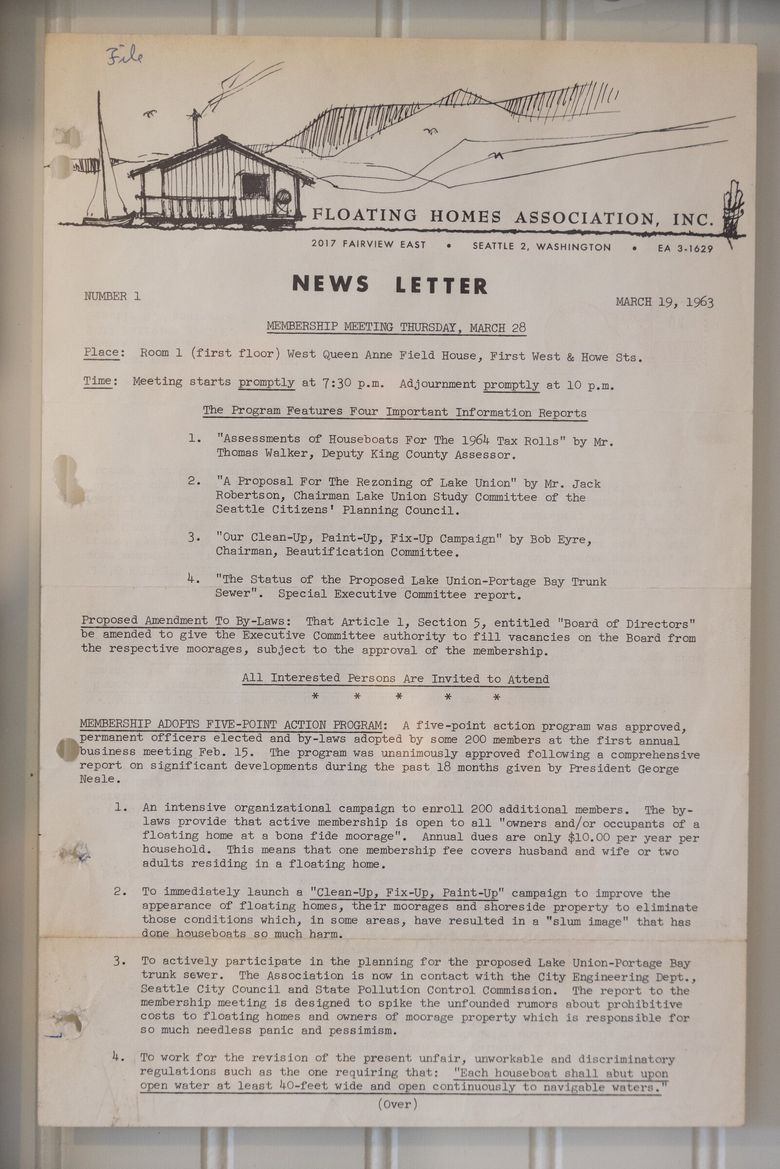
“We’re very close-knit, but we’re also kind of quirky,” says Stafford Green, president of the Floating Homes Association, who has lived in a houseboat in Eastlake with his wife Kristin since 2021. The FHA is currently housed in a cozy, bright yellow cottage close to the shore in Eastlake (where it also operates a tiny museum, opened earlier this year), but when it was founded in 1962, the association was dispersed among a subset of residents. They had banded together to stand up to the city, which was trying to get rid of floating homes. It considered them urban blight.
One of the main complaints against floating homes was sanitation because their sewage flowed directly into Lake Union (as it did from upland homes around the lake). There was no citywide sewage plan until the 1950s, but houseboats were the target offenders.
Keasler Cottage, once the home of longtime floating home advocate Bill Keasler, now serves as the Floating Home Association’s headquarters. Set on Lake Union in the Eastlake neighborhood, the organization… (Ken Lambert / The Seattle Times)
In 1965, the FHA helped connect the homes to city infrastructure by completing its own shoreline sewer system.
“We essentially de-weaponized the excuse they were using to get rid of us,” Green says.
More than 50 years since the shoreline sewer system was built, floating homes today are fully connected to city utilities, unlike live-aboard boats and house barges that have their own self-contained systems, much like RVs.
While the FHA helped the floating home community gain legitimacy, in the 1970s the city placed restrictions on “over-water coverage,” limiting the footprint of each floating home to what it was at that time. Then, in 1987, the city capped the number of floating homes at just over 500.
Despite these restrictions, today’s residents approach floating home living with the same bravado and ingenuity as the earliest inhabitants, bringing a playful, idiosyncratic aesthetic to their designs that’s not typical in Seattle architecture.
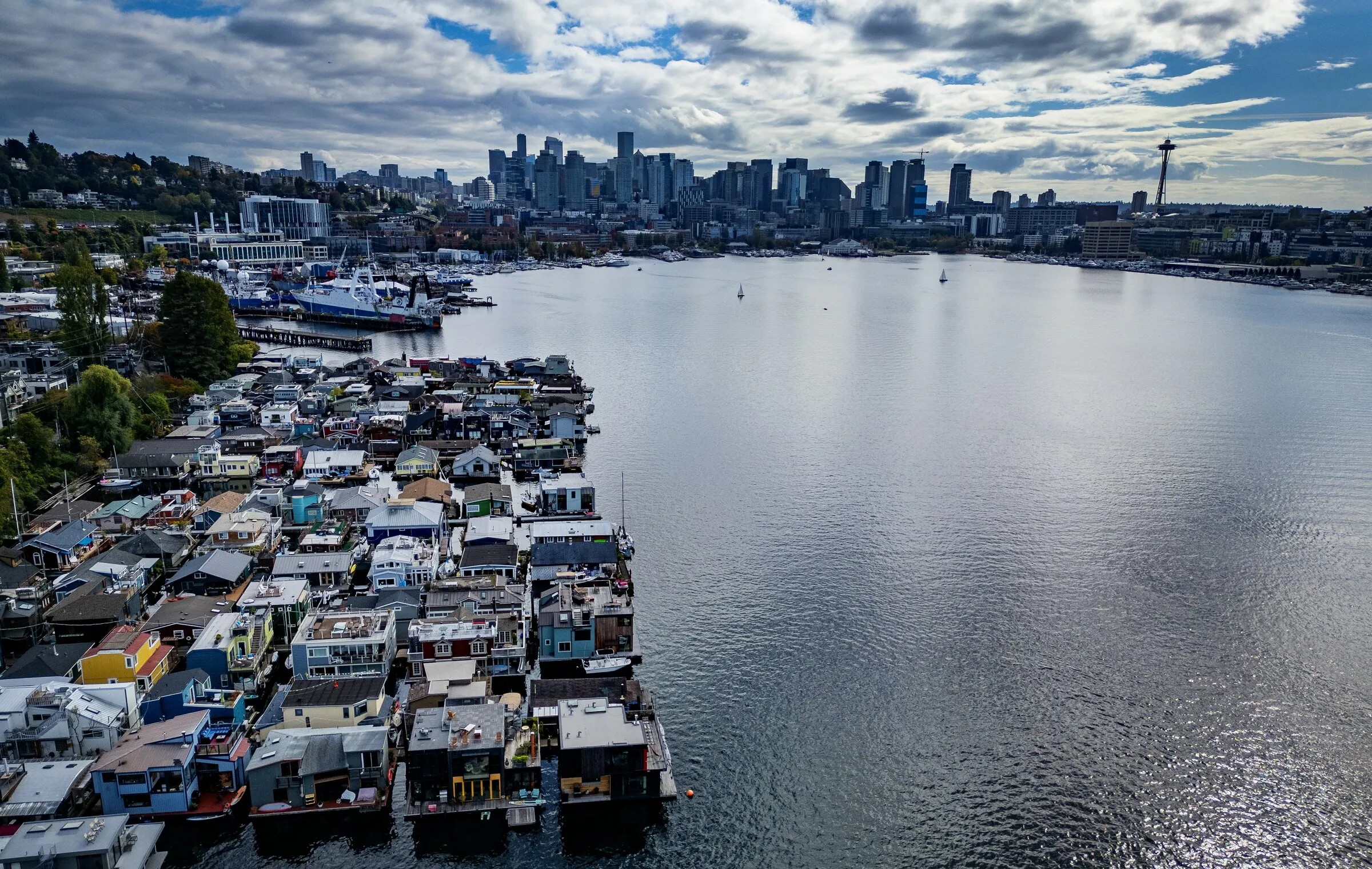
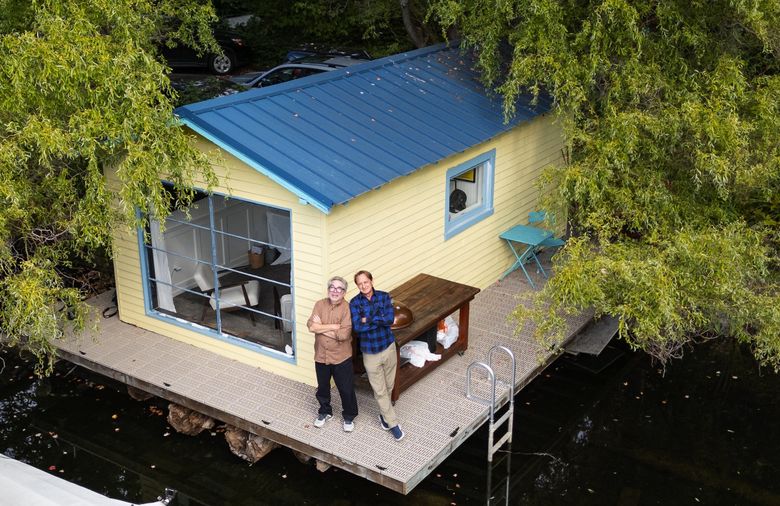
Some residents say the close proximity of neighbors and sharing a dock build camaraderie on Lake Union. A variety of floating homes in the Eastlake neighborhood are seen from the air. In the distance are… (Ken Lambert / The Seattle Times)
Community and Decay
“The city is noisy and chaotic, but then you go down the stairs of your dock,” says Green, describing his favorite thing about floating home living. “You might see a beaver or some birds fishing. You walk by all your neighbors on the dock because you’re not driving your car into a garage, so it feels like a big community of roommates. But then you shut the door of your house, and you’re isolated again. By nine o’clock, it’s completely silent.”
Green is part of a big wave of turnover on the lake. “On our dock, a lot of the older generation has moved off, and we now have a lot of young families and children,” says Melissa Ahlers of her floating neighborhood in Eastlake’s Mallard Cove.
A realtor specializing in floating homes, Ahlers has lived in the community for 26 years. “When we moved down here, we thought we would move off after a few years,” she recalls. “But then, we realized we were part of a really special community. The people here end up being like your extended family.”
Indeed, it’s impossible to ignore your neighbors in a floating home. Besides sharing a dock and oftentimes membership in a co-op that owns the dock and connected shoreline, camaraderie comes from living so close. “There isn’t anybody on my dock that I couldn’t call if my world was falling apart at 3 a.m.,” Ahlers says.