The Metropole Building in Seattle’s Pioneer Square had been vacant for 17 years when the Satterberg Foundation brought us in to assess its potential. Open to the weather, damaged by multiple earthquakes and fire, with collapsed upper floors and deteriorating masonry facades, it was a building most would have written off. But the Foundation saw an opportunity to create a permanent, affordable home for nonprofit organizations serving Seattle’s BIPOC communities, and to demonstrate that historic preservation, climate leadership, and social equity don’t have to be competing priorities.
Start With the Community
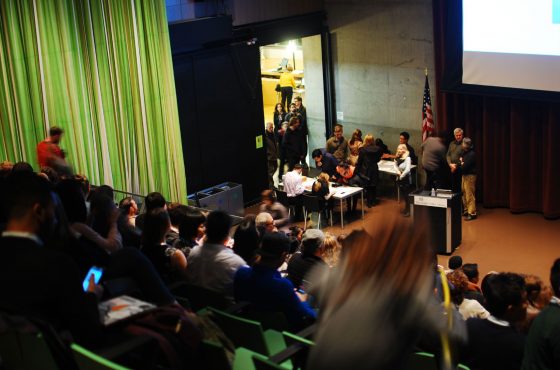
Before design, we spent 12 months in community engagement. Over 15 events—focus groups, virtual meetings, and in-person interviews with community advocates, nonprofit organizations, and local residents—we asked a straightforward question: what do you actually need to live and work in downtown Seattle?
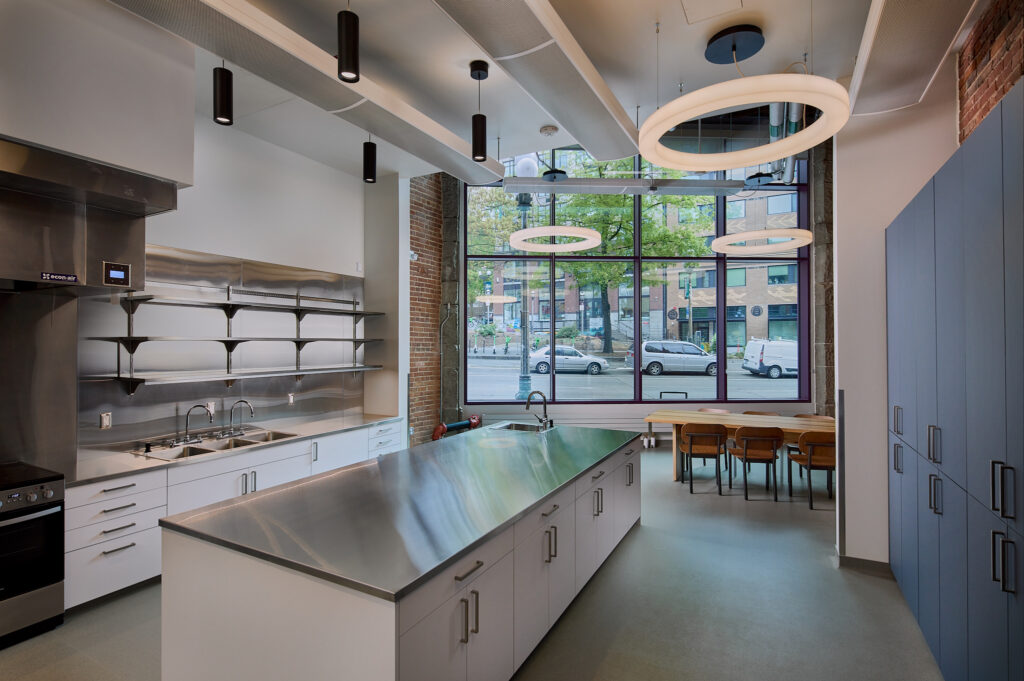
The answers drove the program directly. The highest-expressed need was affordable child care, followed by shared office space, conference and event facilities, a commercial kitchen for meal programs, and venues for arts and culture.
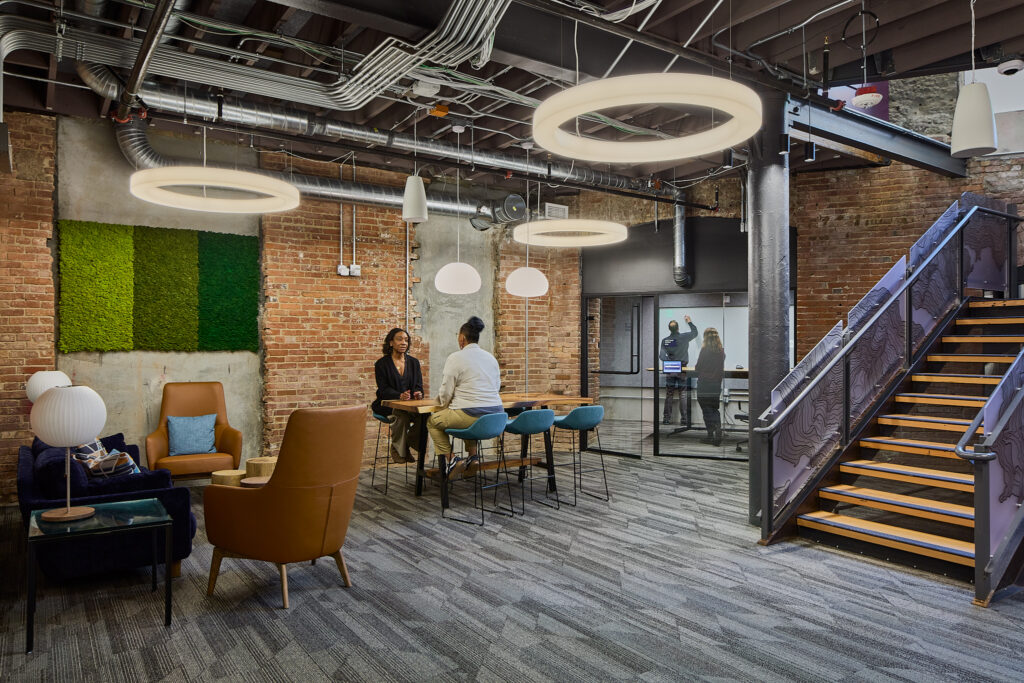

Nonprofit organizations now occupy shared office floors with common break areas, non-gendered restrooms, and flexible layouts. A child care center, community kitchen, arts and culture spaces, a conference and event center, and a rooftop terrace round out the program. Rents are structured to remain affordable for organizations led by and serving historically marginalized communities—groups increasingly at risk of displacement from Seattle’s downtown core.
The program reflects a growing shift in workplace design: from isolated tenant spaces to shared, mission-driven environments that support collaboration across organizations. For many of the nonprofits here, access to amenities like a conference and event center or a commercial kitchen would simply not be possible on their own. Shared infrastructure makes it viable, and in doing so, helps keep occupancy costs affordable for the organizations that need it most.