Hospitality group Aparium has established a niche in running boutique hotels located in old buildings that previously led very different lives, including a Detroit fire station and a savings and loan building in downtown Des Moines, Iowa. The Chicago-based hotel operator has occasionally detoured though from its predilection for adaptive reuse, most notably with Populus, an arboreal-inspired 13-story addition to downtown Denver designed by Studio Gang.
 A grand stair in the skylit lobby leads up to hotel restaurant, Salt Harvest, which is also accessible via an adjacent alleyway. Photo © Duy Dang, Miller Hull Partnership
Working again with Denver-based developer Urban Villages, Aparium returned to its roots for a second outpost of the Populus brand: a 120-key hotel that resuscitates a hulking brick and timber edifice built in 1907—originally the Westland steam-supply warehouse and converted into offices in the 1970s—in Seattle’s historic Pioneer Square neighborhood. Anchoring a block-large redevelopment zone dubbed RailSpur, Populus Seattle opened in May.
The Westland building’s latest incarnation marks the first hospitality project for local architecture firm the Miller Hull Partnership, whose studio is just several blocks to the north. “I hope we do more hospitality because this one was really fun although, in retrospect, actually pretty tough,” says principal Mike Jobes.

1

2
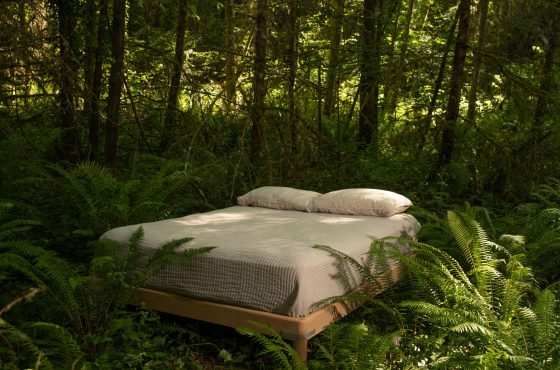
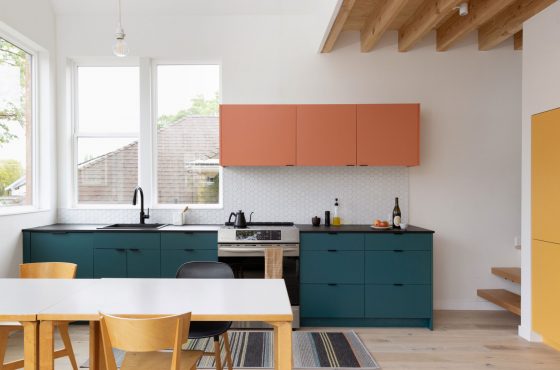
Guest rooms (1) and public spaces (2) feature locally designed furnishings, reclaimed materials, and exposed structural elements. The hotel also boasts an extensive collection of Pacific Northwest–produced art. Photos © Ric Stovall
Pioneer Square is an apt location for the hotel. The historically gritty neighborhood, the oldest in Seattle, is experiencing an upswing thanks in part to the revitalization of downtown’s Elliot Bay waterfront spurred by the 2020 removal of the Alaskan Way Viaduct. Established in 1852 as a lumber district that was home to the original “Skid Row,” Pioneer Square was leveled during the Great Seattle Fire of 1889 and subsequently rebuilt as a bustling commercial hub defined by its wealth of Romanesque Revival buildings. Ups and downs followed over the years; the neighborhood, known today for its nightlife, gallery scene, loft conversions, and sizable homeless population, was hit particularly hard by the Covid pandemic.
Urban Villages’ RailSpur, which encompasses three historic warehouse buildings including what is now Populus Seattle, is a key player in Pioneer Square’s post-pandemic reboot.
“The lack of workers took out all the food and beverage amenities at the street level, and so everything went really quiet,” says project architect Tets Takemoto of Pioneer Square coming out of the pandemic. “It’s been a dead zone but over the last year things have been popping up all over the place—the neighborhood is coming back.”
 The sixth floor is home to a patio-wrapped rooftop cocktail bar and a guest suite with its own private terrace. Photo © Ric Stovall
 View from Firn, the first rooftop bar in Pioneer Square, looking north to downtown Seattle. Photo © Ric Stovall
Serving as a convenient homebase for visitors flocking to the revamped waterfront and to the city’s stadium district just to the south, Populus Seattle also offers locals a novel amenity: Pioneer Square’s first-ever rooftop bar. Featuring sweeping views and lush landscaping by Site Workshop, this sixth-floor destination didn’t come easily. The project team had to navigate both a land use ordinance outlawing eating and drinking establishments on Pioneer Square rooftops and a change in local mass timber building code that permitted for new heavy-timber structures to be built taller than previously allowed but did not address vertical additions to existing timber-framed structures. Ultimately, the longtime ban on rooftop restaurants was adjusted to allow for establishments aiding in neighborhood revitalization and the team successfully adapted the structure to meet the updated code for new mass-timber buildings in Seattle.
“The code change allowed for an assembly space at level six, and that was a fundamental shift from before where even if we could have food and beverage on the roof, which at the beginning was not allowed, it would have to be broken up into smaller pieces,” explains Jobes.
 The Salt Harvest restaurant and its solarium-like extension front an activated Pioneer Square alley. Photo © Duy Dang, Miller Hull Partnership
In addition to the rooftop cocktail bar, a ground-level restaurant that fronts an alley cutting through RailSpur helps to further activate street life. The restaurant’s outdoor dining enclosure sits atop an electrical transformer vault, which again required close work with and approvals from the city.
 Lush greenery and art abound in the lobby. Photo © Ric Stovall
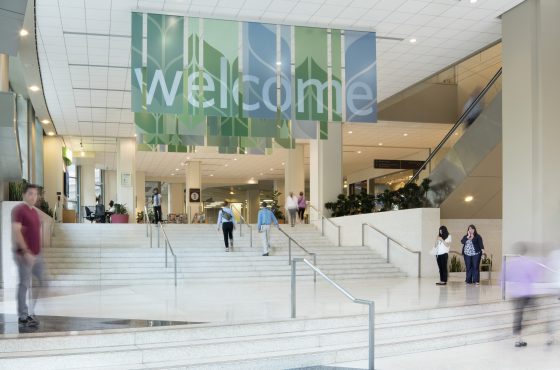
The design team’s most formidable challenge, though, was bringing light into the center of the previously dark and constricted 69,000-square-foot building, including to the hotel’s interior guest rooms and art-filled entry lobby. (Miller Hull worked closely with interiors studio Curioso, while ARTXIV oversees the revolving art program). The building’s elevator bay was relocated to the east to widen and expand an existing light well carved into the center of the building during the 70s-era office conversion. Now topped by an enormous skylight and featuring abundant greenery, the building’s “Garden Sky Court” is the public centerpiece of the hotel. Original Douglas fir timbers are also showcased in the court although in a new location. “We were going to need to cut the old beams to put our core in,” says Jobes. “So rather than cut them, we moved them over whole to repair the ones that were removed and lost in the 70s. I think of it as like a LEGO set—some pieces were thrown away so we moved around other ones and used them.”
Mechanical systems were also modernized and what Jobes calls a “very significant” seismic upgrade was performed to bring the building up to code. Aside from light cleaning, the building’s historic brick facade was left untouched.
 Photo © Duy Dang, Miller Hull Partnership
While the building’s adaptive reuse was often a tricky one to execute, Miller Hull and Urban Village’s thoughtful, surgical approach helped the project meet stringent criteria for the National Park Service’s Historic Preservation Tax Incentives Program. It also garnered approval from the Pioneer Square Preservation Board.
“I think they were so supportive because everything that we presented was effectively saying, ‘look how much we’re activating the street level’— and that’s what they really care about,” says Takemoto. “They care about maintaining the historic character and that there’s new life in a commercial neighborhood.”